Experimental Game Design: Postgaming is an intensive game-making class focused on rapid prototyping and creative risk-taking. The course examines a game industry in the midst of transformation (and possible implosion) while tackling crucial questions in contemporary game-making.
In the first half of the semester, students will create a new game prototype every two weeks, each one responding to a provocative prompt. This phase builds on the established practices of game jams and serial experimentation in independent development.
Topics include streaming culture, the attention economy and market saturation, viral marketing on social media, the rise of generative AI, and more.
In the second half of the semester, the most promising prototypes will be iterated, playtested, and refined into complete projects.
The course is format-agnostic and encourages “out of the box” solutions: you may use any engine or programming language, and rely on as much “vibe coding” as you like. Mods, tabletop and physical games, interactive performances, and other playful experiences are all welcome.
Carnegie Mellon University School of Art
Term: Spring 2026
Course number: 60418
Classroom: CFA 310
Days / time: Friday 10:00AM – 12:50AM and 2:00PM – 4:50PM
Professor: Paolo Pedercini – paolop [at] andrew [dot] cmu [dot] edu
GA: Sarah Al-Sarraj – ssaraj
Office: School of art 419A – 4th Floor
Office hours: By appointment
LEARNING OBJECTIVES
Upon completion of the course you will be able to:
> Understand key concepts in game design
> Tackle critical issues in a rapidly changing field
> Scope a project according to limited time and resources
> Identify promising concepts and accept failures and dead ends
> Contextualize your own work within contemporary cultural practices
> Work in teams on interactive projects
> Develop your personal style and artistic identity
> Research subjects and translate them into playable systems
> Add at least one piece to your creative portfolio
UNITS
Play the World

Assignment: Create 7 non-digital games, one every day, that can be played with little or no props, and can be described with a concise ruleset (less than 100 words).
Topics: games vs play, Fluxus scores, new games movement, urban games, psychogeography, flash mobs, parlor games, playground games.
Readings:
What’s the Point If We Can’t Have Fun? by David Graeber
Play is by Miguel Sicart (from play Matters)
Updating the Classics

Assignment: Redesign a classic board game, making it shorter, more modern, and more relevant to the world we live in.
Topics: Skill vs chance, 4 elements of play, theme and gameplay, depth, perfect and imperfect information, targeted interaction, competition vs cooperation, tactility, paper prototyping.
Reading: The Personal, Political Art of Board-Game Design by Matthew Hutson
Bootleg Game
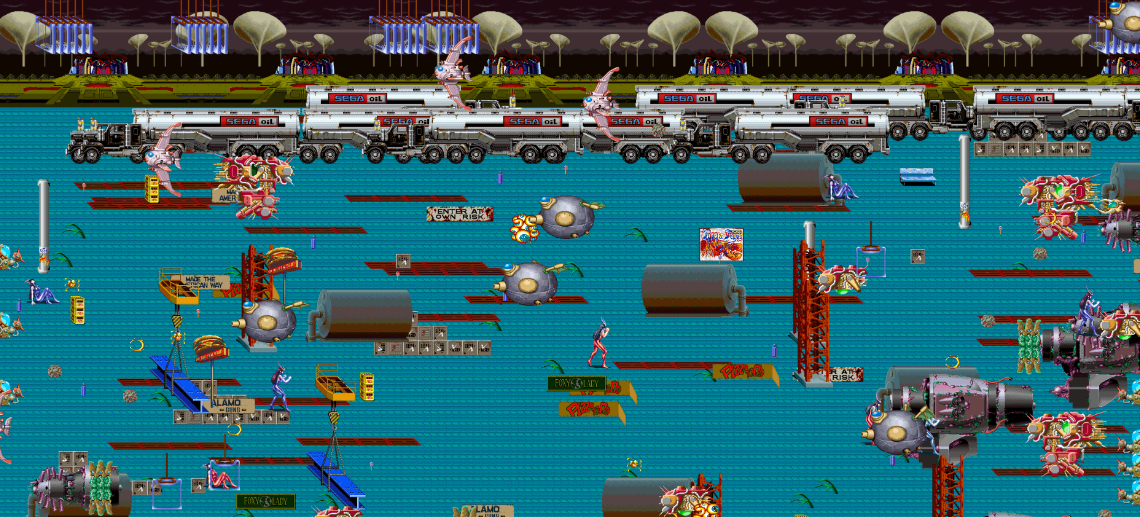
Assignment: 1) Analyze an assigned arcade game and recreate it through “vibe coding”. 2) Develop an experimental variant responding to a prompt. You must not use original assets.
Topics: agency, meaningful play / meaningful choices, scope, learning curve, flow, game feel, originality, plagiarism, AI.
Reading: Game design is simple, actually by Raph Koster
Post Games
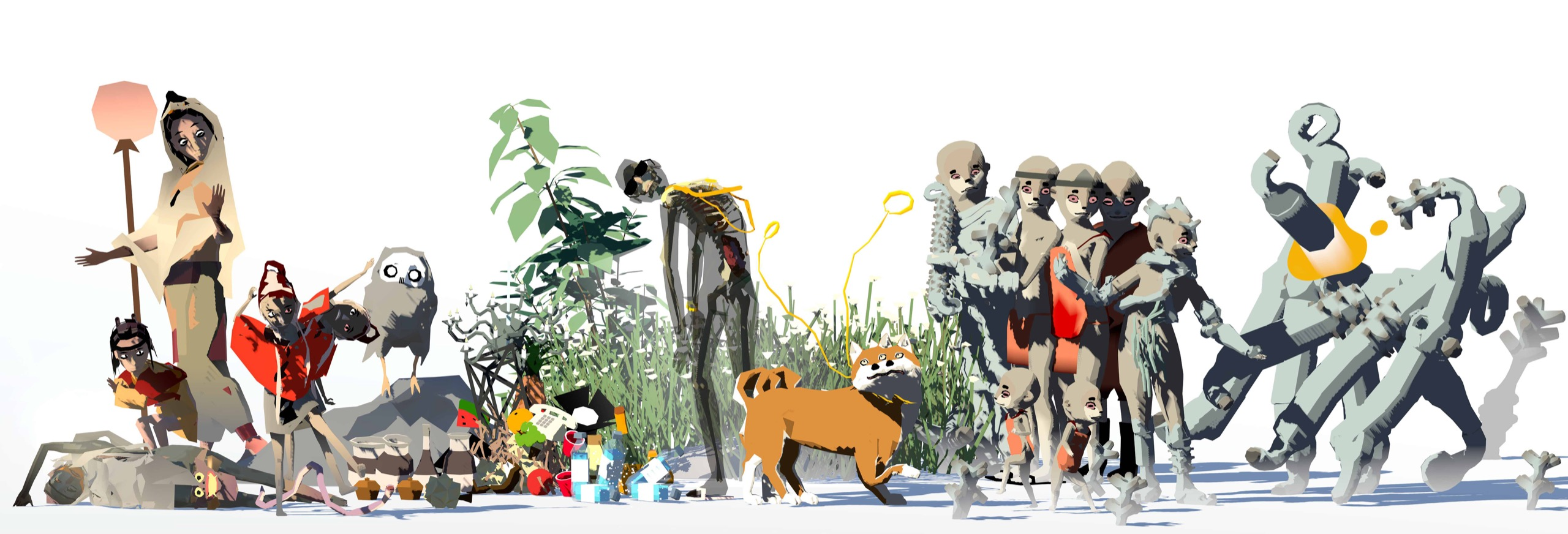
Assignment: A series of brainstorming sessions to develop proposals and then a prototype responding to contemporary issues in the game industry/culture.
A game for one person
Game as content
Non standard game
Plaything
Topics: streaming culture, attention economy, indiepocalypse, alt-interfaces, art games.
Final project
Determine the most successful prototype, expand and polish it into a finished game.
Topics: scoping, style, polishing, branding, QA, self-publishing.
SCHEDULE
A week by week schedule can be found here. Changes of plans announced on discord will override the schedule.
GRADING
Qualitative feedback during in-class critiques is the most important form of evaluation, but we live in a quantified society so grades need to happen.
You will be evaluated differently in the two part of the class.
Fast prototyping phase
A – The prototype has all the core functionalities, an aesthetic direction, and attempts to do something innovative
B – The prototype has all the core functionalities, and an aesthetic direction
C – The prototype doesn’t have all the core functionalities, and/or an aesthetic direction. It is not possible to evaluate its potential.
D – no delivery
F – no show
Final project phase
A. Outstanding concept and implementation. The project can be published and added to your portfolio.
B. The project is original and complete, all the core components are functional, but it feel unpolished and not ready to “ship”.
C. The game is incomplete and/or the idea is derivative.
D. The game doesn’t work, it has major bugs or is incomplete to a point that is impossible to get a clear idea of the user experience.
E. The student failed to deliver the assignment.
Making (and teaching) games is hard because there different dimension of success and failure.
Ideally your game:
Works as artwork – does something innovative, it’s in dialogue with contemporary artmaking, it tackles complex issues.
Works as experience – the player understands what to do, it’s aesthetically polished, it’s well presented and enticing, the difficulty level and learning curve are adequate for the intended audience.
Works as game – the gameplay is not broken, there are no dominant strategies, the gameplay succeeds in its own terms (a roguelike is replayable, an exploration game makes you want to explore, a match 3 game is addictive).
Works as software (if digital) – it runs, the features are complete, it doesn’t crash, there are no bugs.
Final grade composition
10% 7 microgames
20% Updating the classics
20% Bootleg game
30% Final Project
20% Class Participation
REQUIRED MATERIAL
-A laptop. You don’t need a powerful gaming computer but consider we won’t be working in a computer lab.
-The charger is not optional.
-Software: all the programs used in this class are free or provided by the school.
POLICIES
I’ll ask you to read and sign a little contract. We will discuss it and amend it on the first day of class.
* Absences:
I will inform the professor and my teammate of my absences via email at least one hour before class.
I’m entitled to a total of 4 absences (4 sessions) over the course of the semester.
This class doesn’t differentiate between justified and unjustified absences.
I am not required to give my professor any justification nor explanation for my absences.
I am aware that more than 4 absences will cause a drop of one letter grade and may trigger a check from my academic advisor, the university’s health services, or disability resources.
I am responsible to catch up with the class, and to look into the material that I have missed.
I understand my assessment method may different if I miss a critique or a discussion.
I will not expect any online or hybrid accommodation if I’m not able to attend class.
* COVID 19
I will comply with CMU and the CDC coronavirus policies regarding isolation and quarantine.
I understand absences due to COVID may have to be validated by the university.
* Tardiness
Arriving over 15 minutes after the scheduled start time will count as absence.
* Participation
I will engage actively in discussions and critiques.
I expect the professor to adopt a variety of critique formats to account for different personality types.
* Net addiction
I value face-to-face interaction, so I commit to not use phones and computers during lectures, critiques, and discussions, i.e. any time somebody is presenting to the class, except for taking notes.
* Communications
I will use the class Discord to keep up with asynchronous communications, announcements, and questions that could be of general interest.
To keep a proper record, I will use the CMU email for personal communication with the professor.
I will never DM the professor through Discord or other social media.
*Assignments
I will negotiate late assignment submissions with the professor at least 24 hours before the deadline.
I understand it will have to be justified and will not be automatically granted.
I will be present and I will participate to critiques even if I don’t have my assignment.
*Office hours
I am entitled to a one-to-one meeting with the professor for feedback and general check-in every semester.
*Plagiarism and “collaborations”
I acknowledge that the concept of plagiarism is somewhat elusive in digital media as we working with open source tools and libraries, remixing and building upon the work of a multitude of people.
I will credit all the work and components that I use according to the licenses applied to them.
I will not outsource the class work to other people nor plagiarize assignments and exercises from my classmates.
*Generative AI
I will not use generative AI tools such as ChatGPT in the creation of the assigned projects, unless previously negotiated with the professor, or when they are embedded in the assigned tools (e.g. AI for upscaling or stabilizing video).
I’m aware that any unauthorized use of text, video, and sound generated by AI may be considered plagiarism and treated as such.
I will transparently account for authorized uses of AI, citing all the tools and processes.
When using generative AI for research, text editing and manipulation, I will assume all responsibility for inaccuracies, biases and hallucinations, and take extra care to verify the output.
*Community agreements
These statement apply to both student and instructors: We will speak from our own experiences (make ‘I’ statements).
We will respect differences; we’re all privileged in some ways.
We agree to critique ideas, not people.
We will not assume the identity of others, nor ask individuals to speak for their perceived social group.
We will hold this as a brave space, where we take risks, be vulnerable and hold each accountable with love and respect.
We agree to have only ‘one mic’: we will listen respectfully without interrupting.
We agree to practice active listening: when someone is speaking, we will listen without also thinking about how we are going to respond/rebut.
We may share what we learn but will keep others’ stories and personal experiences in confidence.
We will ‘move up, move up’: those who tend to speak a lot will ‘move up’ their listening; those who tend to hold back and listen will ‘move up’ their speaking.
INCLUSIVITY STATEMENT
It is my intent that students from all diverse backgrounds and perspectives be well served by this course, and that the diversity that students bring to this class be viewed as a resource, strength and benefit. It is my intent to present activities that accommodate and value a diversity of gender, sexuality, disability, age, socioeconomic status, ethnicity, race, and culture.
I will gladly honor your request to address you by your preferred name and gender pronoun. I commit to make individual arrangements to address disabilities or religious needs (e.g. religious events in conflict with class meetings). Please advise me of these preferences and needs early in the semester so that I may make appropriate changes to my plans and records.
Debate and free exchange of ideas is encouraged but I will not tolerate harassment, i.e. a pattern of behavior directed against a particular individual with the intent of humiliating or intimidating.
CONTENT/TRIGGER WARNINGS
Being in an art school, you should expect to be exposed to content that challenges your moral, ethical, and aesthetic values. In case of extremely graphic content I will warn the class in advance, but if you have a history of PTSD please let me know privately if there are types of content that are known to act as trauma triggers for you.
STRESS CULTURE
Collaborative work and projects also fulfilling other classes’ requirements are encouraged as long as it makes sense, and the other professors agree.
Official university language: Take care of yourself. Do your best to maintain a healthy lifestyle this semester by eating well, exercising, avoiding drugs and alcohol, getting enough sleep and taking some time to relax. This will help you achieve your goals and cope with stress.
All of us benefit from support during times of struggle. You are not alone. There are many helpful resources available on campus and an important part of the college experience is learning how to ask for help. Asking for support sooner rather than later is often helpful.
If you or anyone you know experiences any academic stress, difficult life events, or feelings like anxiety or depression, we strongly encourage you to seek support. Counseling and Psychological Services (CaPS) is here to help: call 412-268-2922 and visit their website at http://www.cmu.edu/counseling/. Consider reaching out to a friend, faculty or family member you trust for help getting connected to the support that can help.