
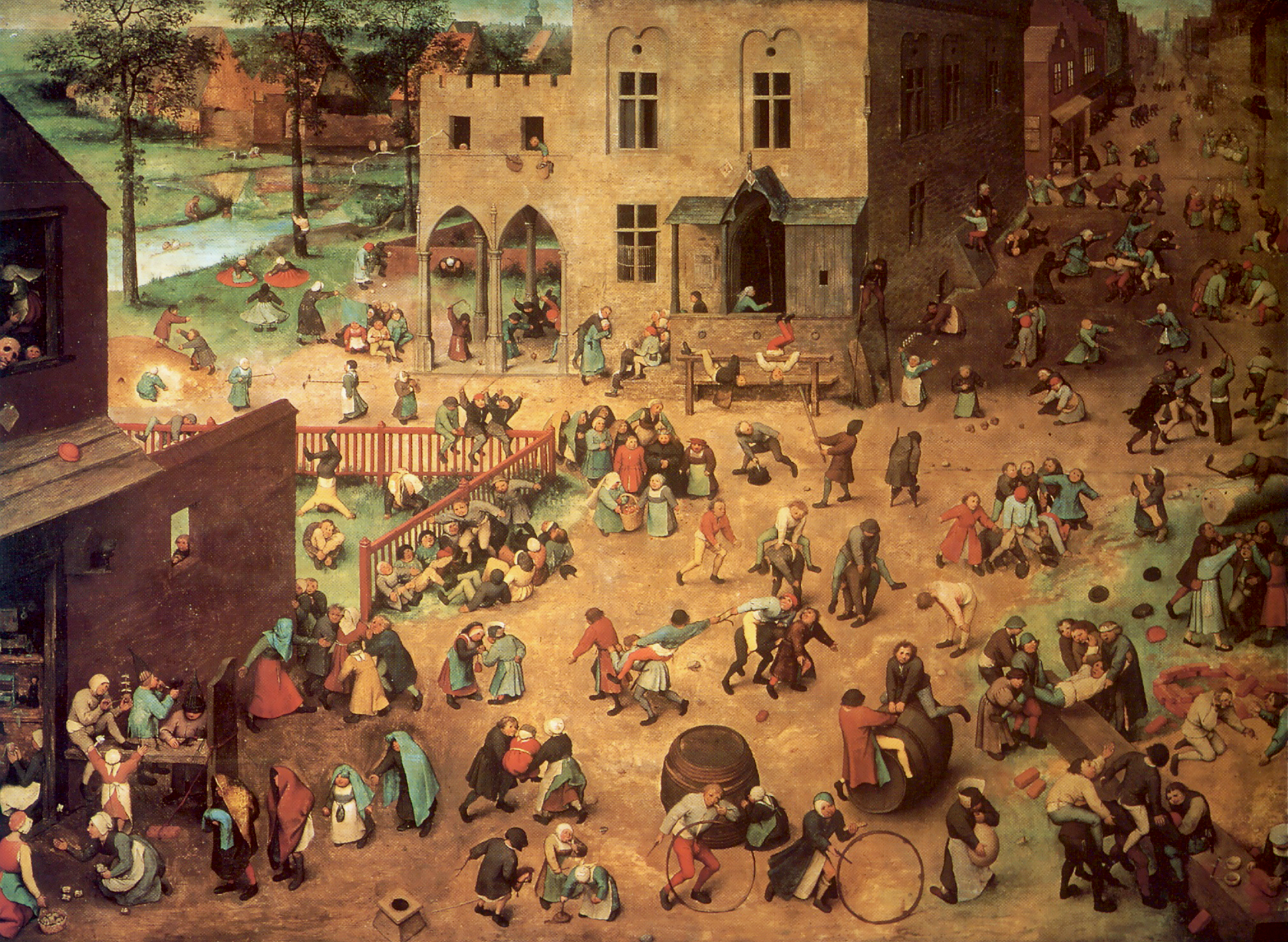
We are going to start the course by looking at game design as a diffuse cultural practice, outside of dedicated digital media and commercial circulation.
Games can exist anywhere and be designed by everyone.
The first assignment is to create 7 non digital games. Try to create one every day.
They have to be playable with no props or few commonly available object.
They must be described by a concise ruleset (100 words or less).
They must have a title.
Try to make at least:
One game that can be played in class in a couple of minutes (it will be critiqued).
One game that must be played every day or for a long time.
One game that uses an existing technological system (phone, app, messaging, social media).
One game that plays with a specific element of the environment.
One game that is (almost?) impossible to play but interesting to think about.
Post them on discord as individual posts. React and comment on your classmates’ games.
Let’s introduce each other and break the ice with the handshake game from Agusto Boal.
Micro games?
Zine from 2017, illustrated by Everest Pipkin
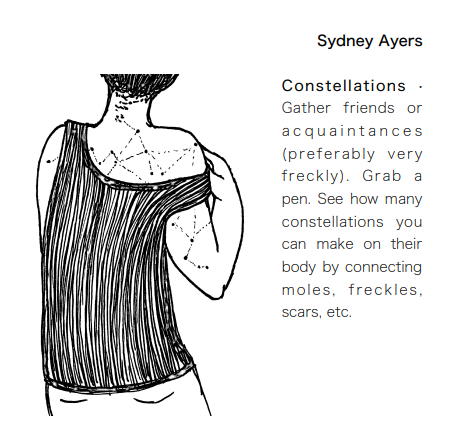
https://molleindustria.org/files/63_microgames.pdf
Casual Games for casual hikers / city walkers / protesters
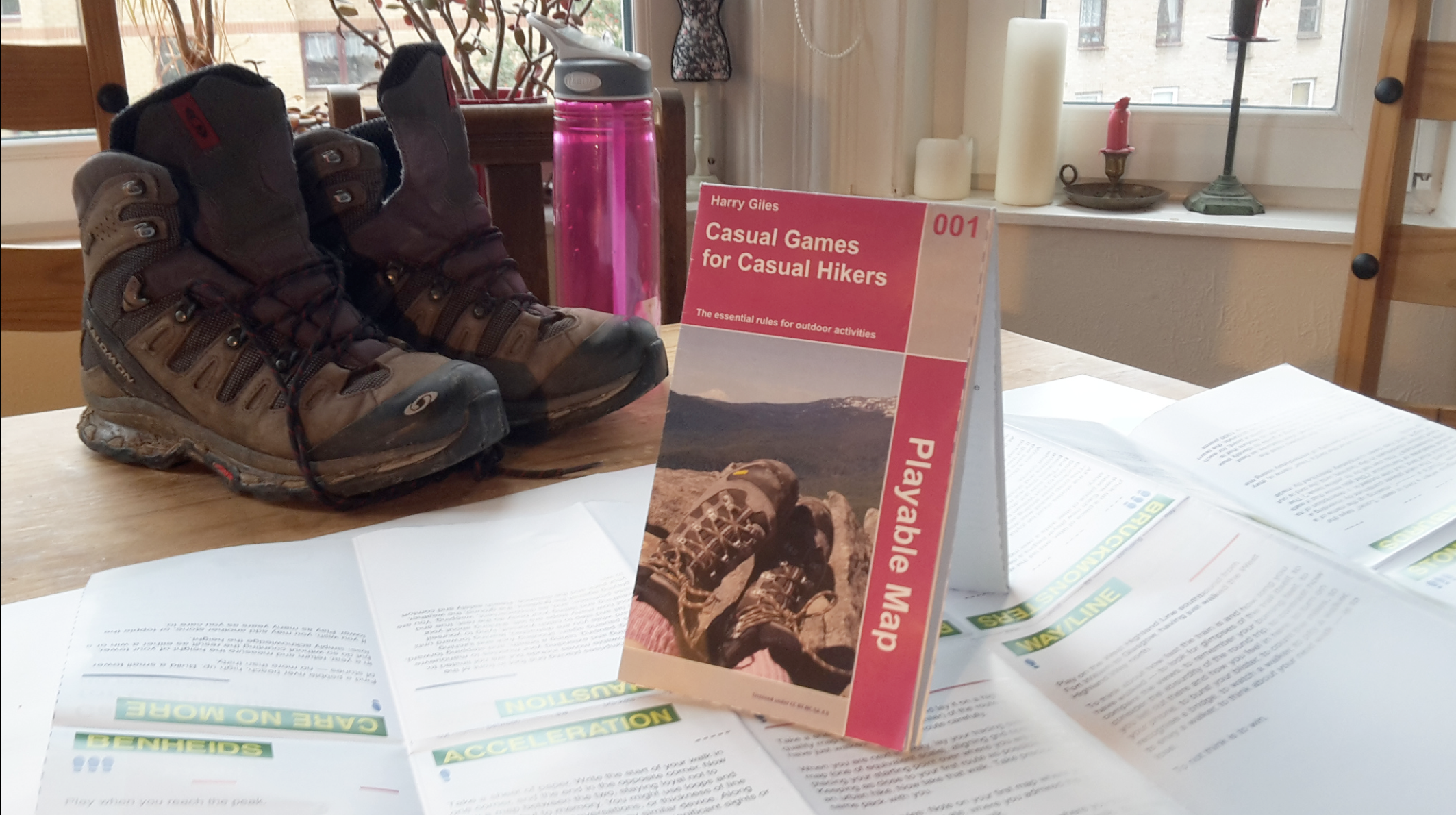
Casual Games for casual hikers site
Instruction pieces / scores
Artists from the Fluxus movement had a keen interest in games and procedural pieces. Yoko Ono wrote several poems that sometimes read like absurdist game rules or impossible performances.
Draw a Straight Line and Follow It -La Monte Young
Draw a map to get lost -Yoko Ono
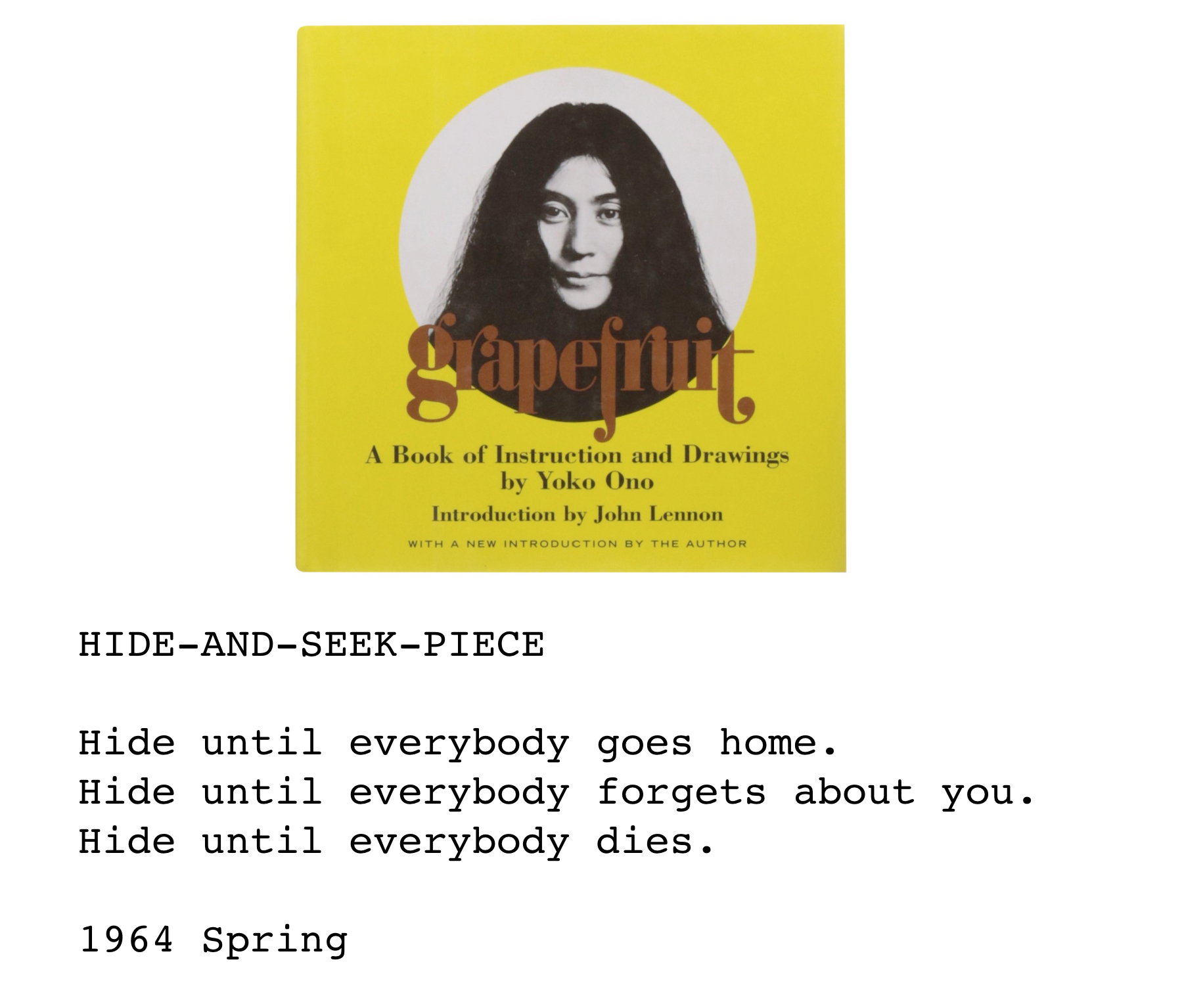
Unfortunately there’s no digital version of Grapefruit but you can find most of the pieces as scans
“The floor is lava” is a popular game/instruction piece.
The Game is another conceptual one – but is it even a game?
Parlor Games
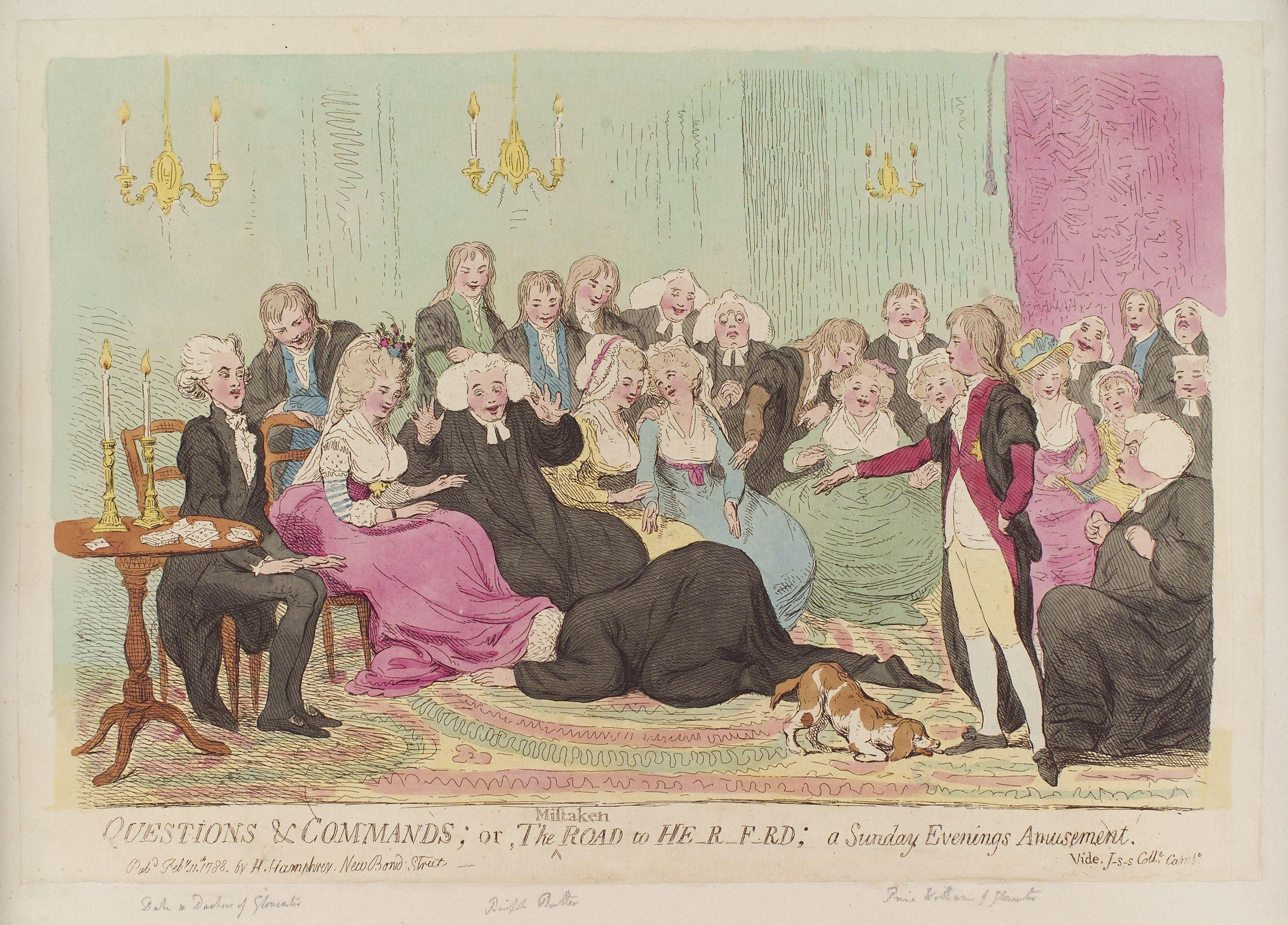
Popular among British and American upper classes during the Victorian era, often involved language, logic, dramatic skills and light physical action.
Charades, 20 Questions, Telephone, Truth or Dare, Who am I? all originated as parlour games.
Pictionary, Taboo, Mafia / Werewolf are modern, commercialized parlor games.
Consequences: A paper-and-pencil game where players write a story in parts, without seeing the previous lines, leading to amusing outcomes.
The surrealists would later turn it into a visual game – the Exquisite Corpse
THREESOME (VOYEURS ALLOWED!)
by Jane McGonigal
A game about uncommon things in common.
You have three minutes to figure out the strangest thing you all three have in common. It might be a place you’ve been, a feat you’ve accomplished, a person you’ve met, an experience you’ve survived, a job you’ve performed, a talent you’ve cultivated. Anything that’s true of all three of you technically counts as a win. But to make it a truly freaky threesome, try to come up with one fact that’s true for all three of you that you think is pretty unusual, awesome, or fun. Three minutes goes fast… so don’t hold back. Let the freaky facts fly!
THIS IS YOUR LAUGH
by Bennett Foddy
The more assertive player moves first. Say: “This is your laugh: “, and then do an impersonation of the way that the other person laughs. Then it is their turn.
You lose the game if you laugh for real, whether it’s your turn or the other person’s turn. Snorts are allowed. Titters are fair game. But anything from a chuckle up to a full roaring, crying, peeing belly-laugh is game over.
Your impersonation doesn’t need to be accurate or realistic, but you are more likely to win if it has at least a grain of truth to it. Do not play this game if your friend is easily offended and has a stupid-sounding laugh!
Games for Actors and non actors
Columbian hypnosis
by Augusto Boal
Divide into pairs.
Each pair decides who is Player A and Player B in their small group.
Then, ask Player A to hold the palm of his or her hand about six inches from Player B’s face.
Ask Player B to imagine that her or his partner’s hand has hypnotized him/her and that s/he has to follow it anywhere it goes, keeping the same distance between her/his face and the palm at all times.
After a set time, switch and let B’s lead.
The machine of rhythms
by Augusto Boal
An actor goes into the middle and imagines that he is a moving part in a complex
machine. He starts doing a movement with his body, a mechanical, rhythmic
movement, and vocalising a sound to go with it.
Everyone else watches and listens, in a circle around the machine. Another person goes up and adds another part (her own body) to this mechanical apparatus, with another movement and another sound.
A third, watching the first two, goes in and does the same, so that eventually all the participants are integrated into this one machine, which is a synchronised, multiple machine.
When everyone is part of the machine, the Joker asks the first person to accelerate his rhythm – everyone else must follow this modification, since the machine is one entity. When the machine is near to explosion, the Joker asks the first person to ease up, gradually to slow down, till in their own time the whole group ends together. It is not easy to end together, but it is possible.
For everything to work well, each participant really does have to try and listen
to everything he hears.
Love and hate. The same exercise, with the following modification: all the partici-
pants must imagine a love machine, then a hate machine.
–
Today improv comedy often uses games and game-like activities for warm-up or to structure the improvisation.
New games movement
“In building New Games, the young adults of the late 1960s and early 1970s hoped to create a new set of rules and with them, a new way to live. If the games of the Cold War had presumed competition and enmity, New Games would foster cooperation and empathy”
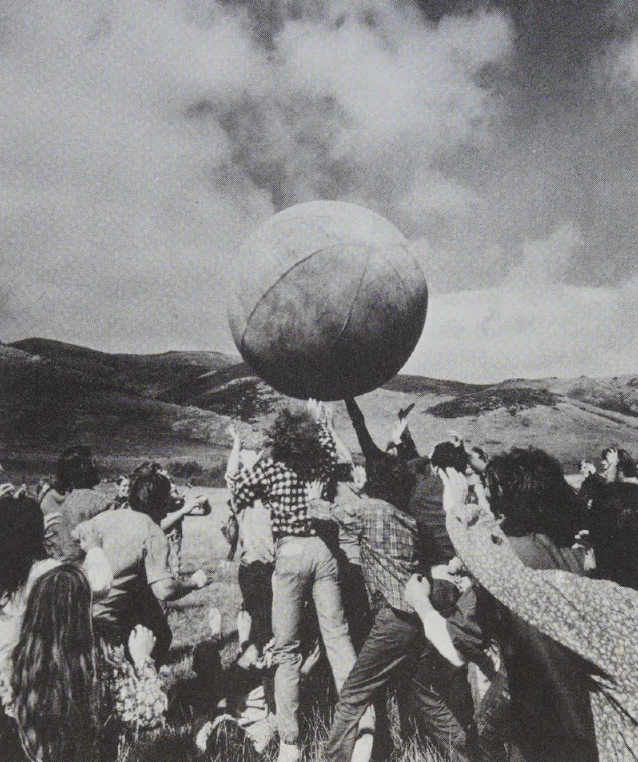
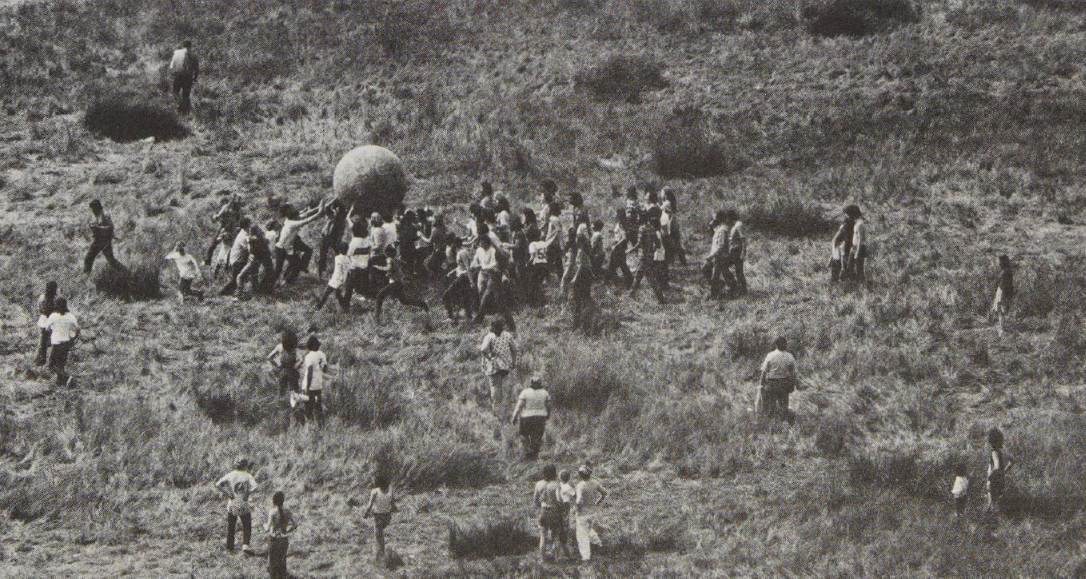 Earthball
In late 1966, as the American commitment to the Vietnam War was ramping up, the War Resisters League at San Francisco State College asked multimedia artist Stewart Brand to stage an event.
He gathered a hundred or so pacifists into an open field and with their help, inflated a 6-foot-diameter ball that had been painted with continents, waterscapes, and clouds.
He then took up a megaphone and announced:
“There are two kinds of people in the world: those who want to push the Earth over the row of flags at that end of the field, and those who want to push it over the fence at the other end. Go to it.”
The crowd on the field charged the ball from all sides. The ball began to roll toward one end of the field—yet as it did, members of the pushing team defected, rushing around to the other side of the ball and pushing it back the way they had just driven it. When they reached the other end of the field, they turned around again.
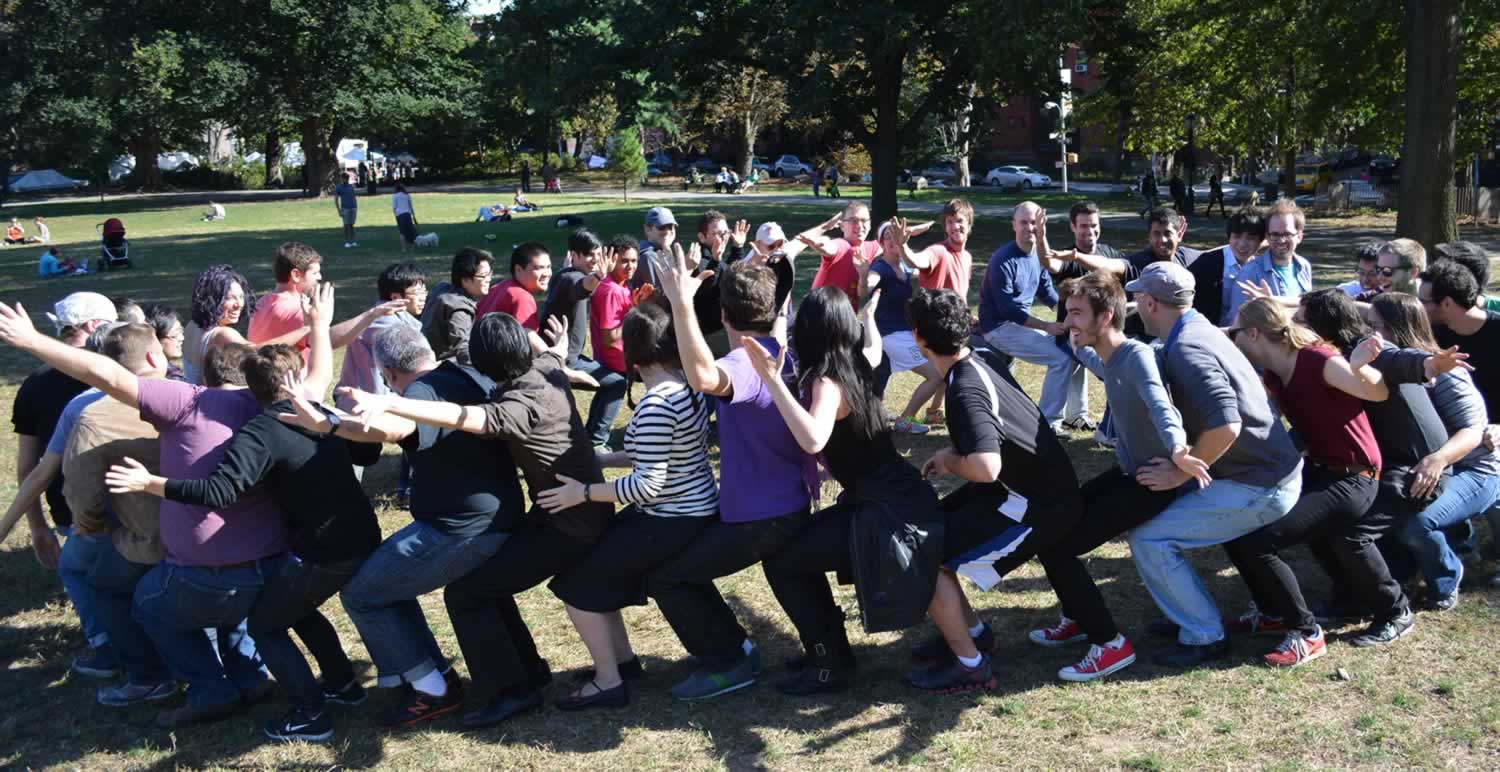
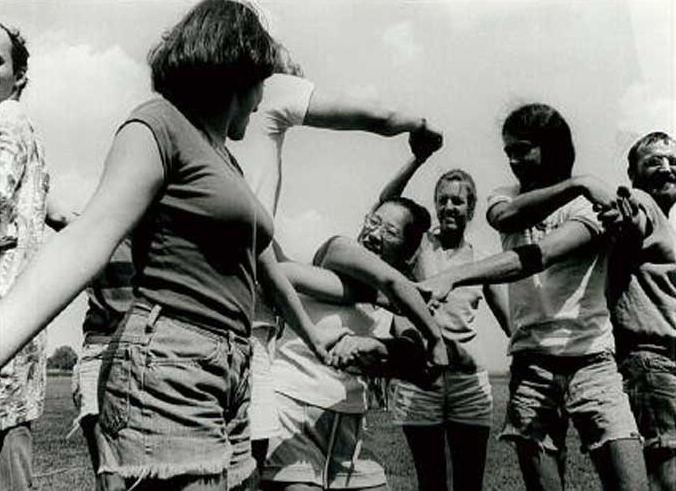
The lap game and the human knot game, and parachute games are “new games” that are commonly played in summer camps, and for team building purposes.
New Games – an historical perspective
Modern Playground Games
Ninja
- Players form a circle, each standing at arm’s width away from each other.
- On the count of “3… 2… 1… NINJA!” all players jump into ninja poses. Choose your pose wisely!
- Randomly choose a ninja to begin.
- On their turn, each player is allowed to make one swift ninja attack. This can involve your whole body. Eliminate others by striking their hand – the wrist is not included. You must stiffly hold the position you end your move in.
- The next player is allowed to move once you have have finished your attack.
- If you are attacked by another player, you may dodge, but you can’t move your feet.
- When only two players remain, they begin the final duel. The final two ninjas stop fighting, bow, and stand back-to-back. On the count of “3… 2… 1… NINJA!” they jump into poses. The ninja with the boldest pose goes first and play resumes normally.
- The game ends when only one ninja remains.
Blowdart game
(the video doesn’t show exactly how it works but it’s fun)
The object of the game is to call someones name and when they look, dart them.
“Darting” occurs when you make eye contact with a victim, make a fist over your mouth (as if you were holding a blow gun) and make a “pfffft” sound. If you are hit with a dart you must immediately stop what you are doing and fall to the ground.
Your not allowed to move or get up until someone approaches you and removes the dart from your neck. You can avoid darts by a) looking away before the dart is shot b) closing your eyes before the dart is shot or c) covering your neck with your hand before the dart reaches you.
- You may not dart someone who has pre-existing eye contact with you–only those who turn and look when their name is called
- You may not block your own neck and shoot at the same time.
- Your victim must make eye contact before you fire.
- It is recommended that the person that removes the dart cannot be the same person who darted you.
- The victim cannot attempt to shoot back. Holding a blow gun in the face of another blowgun does not constitute a valid block.
Massively multiplayer thumb wrestling
A game borrowed from Austrian collective Monochrom
Bomb and shield + Triangle
- Everyone stands in a defined playing area.
- There is a bomb that will explode in 2 minutes and the only way to avoid the blast is to have a shield between you and the bomb.
- Each player secretly chooses someone else that will be the Bomb and another player that will be the Shield.
- On ‘Go’ signal, every player attempts to move so that his Shield is between himself and his Bomb.
Spaghetti Standoff
6-8 players stand in a connected circle, each holding two uncooked spaghetti noodles in either hand (shared with their adjacent neighbor), forming a big chain.
The moment the game starts, it is everyone’s goal to be one in the last pair of players with their fragile noodle friend intact. When one of your strands breaks, you put that arm behind your back, and if both strands break, you’re out for that round.
official link
Playgrounds
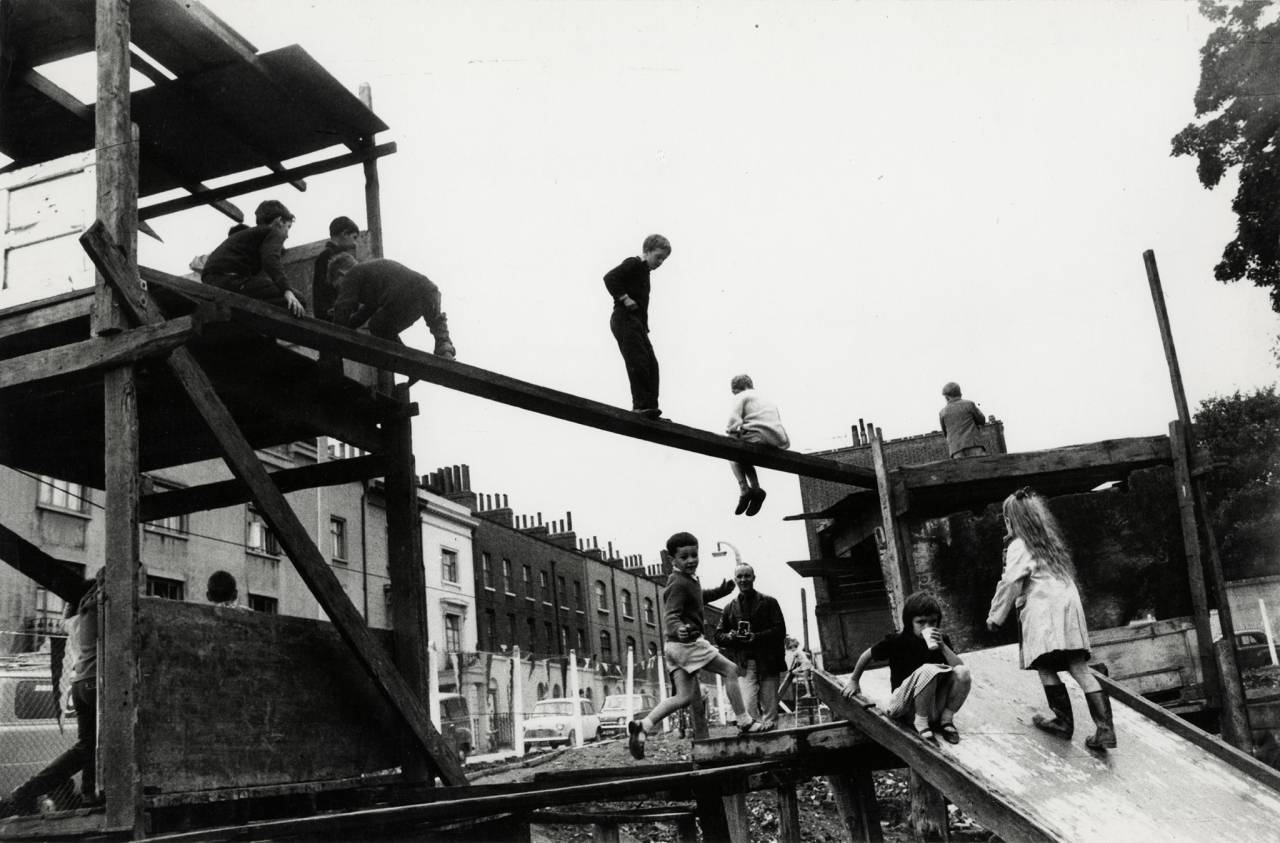

Mini doc on contemporary adventure playgrounds
See also Adventure playground: a parable of Anarchy
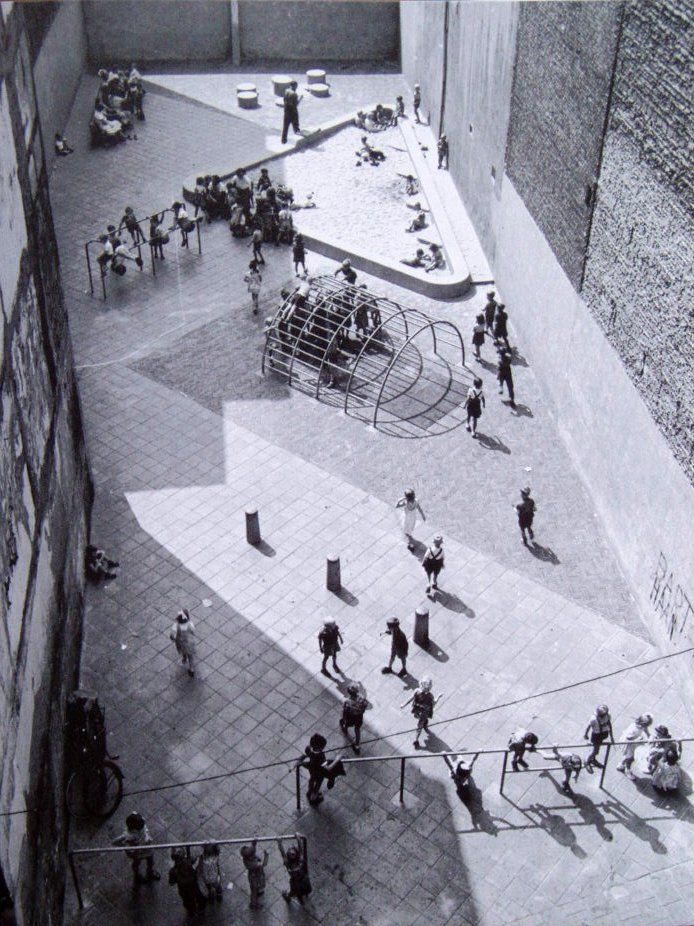
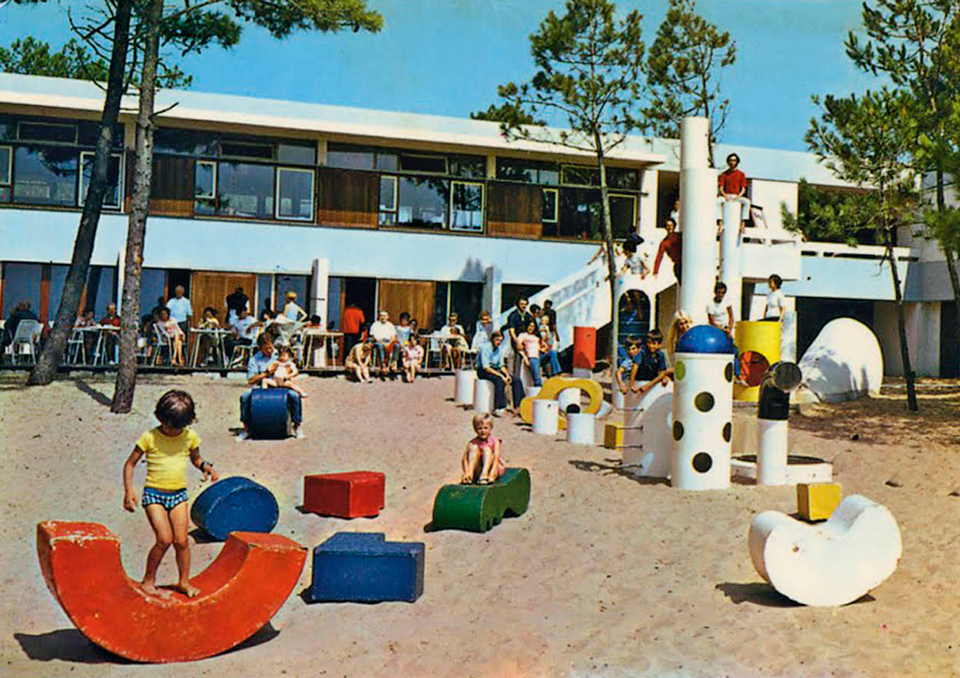
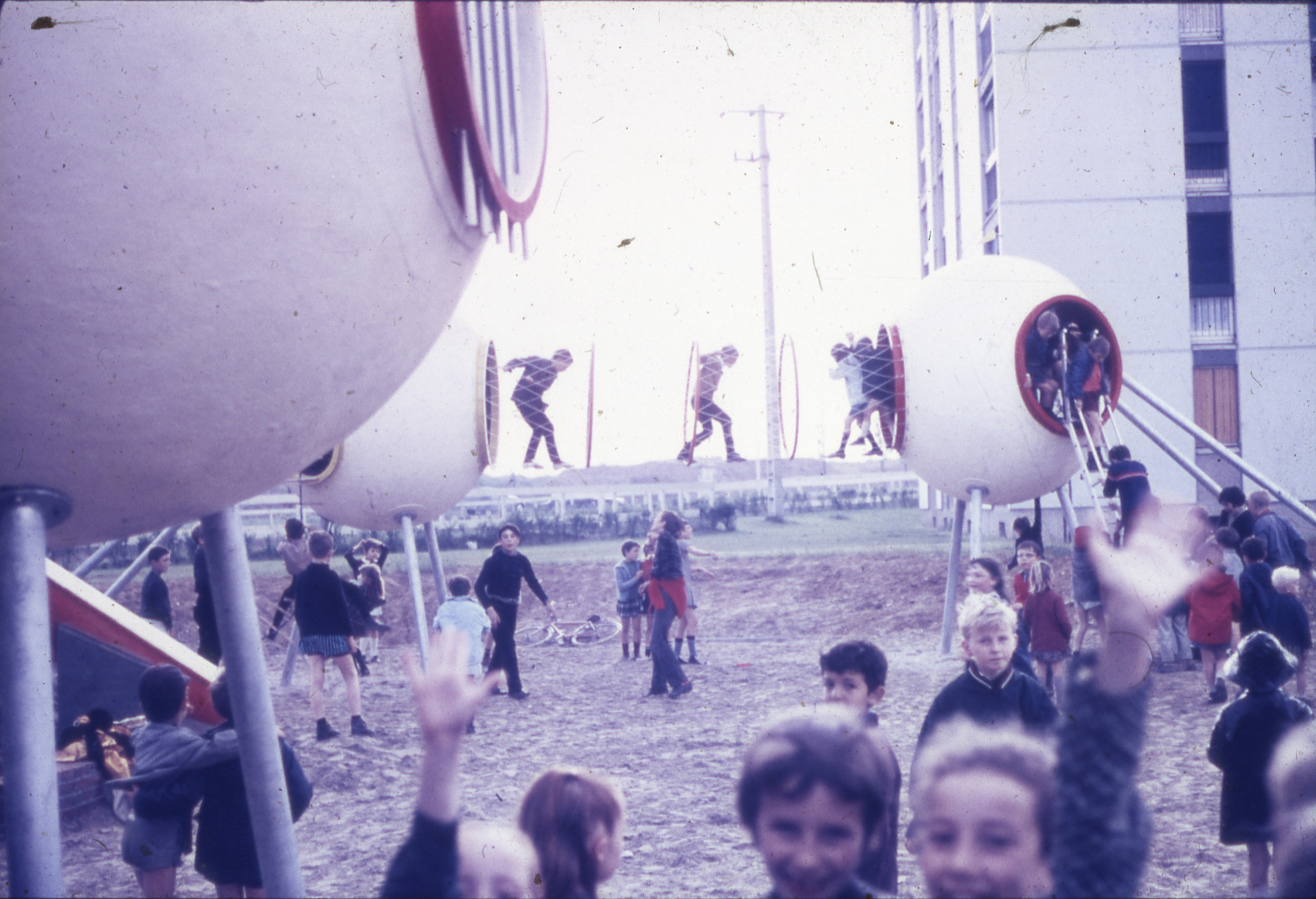
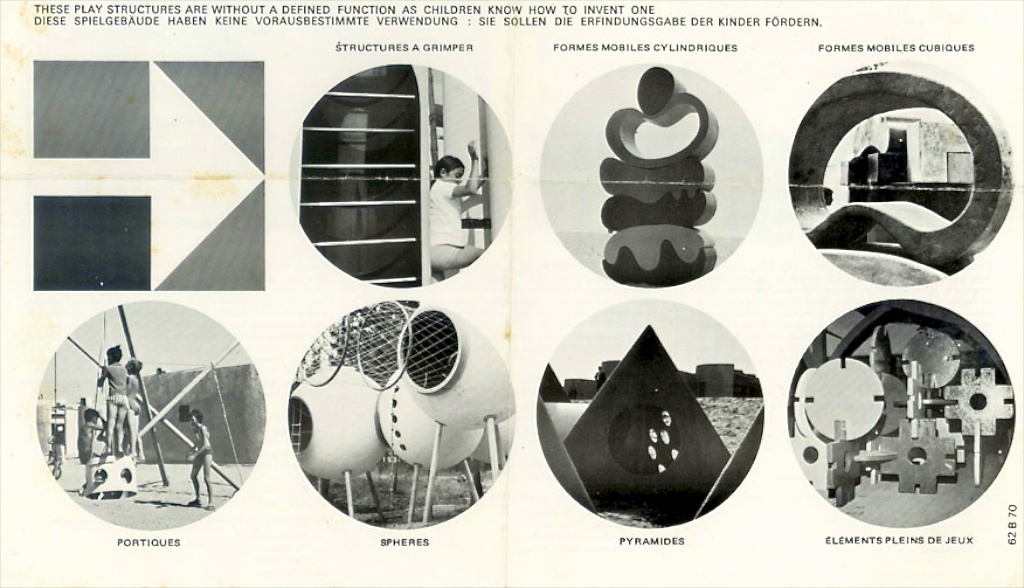
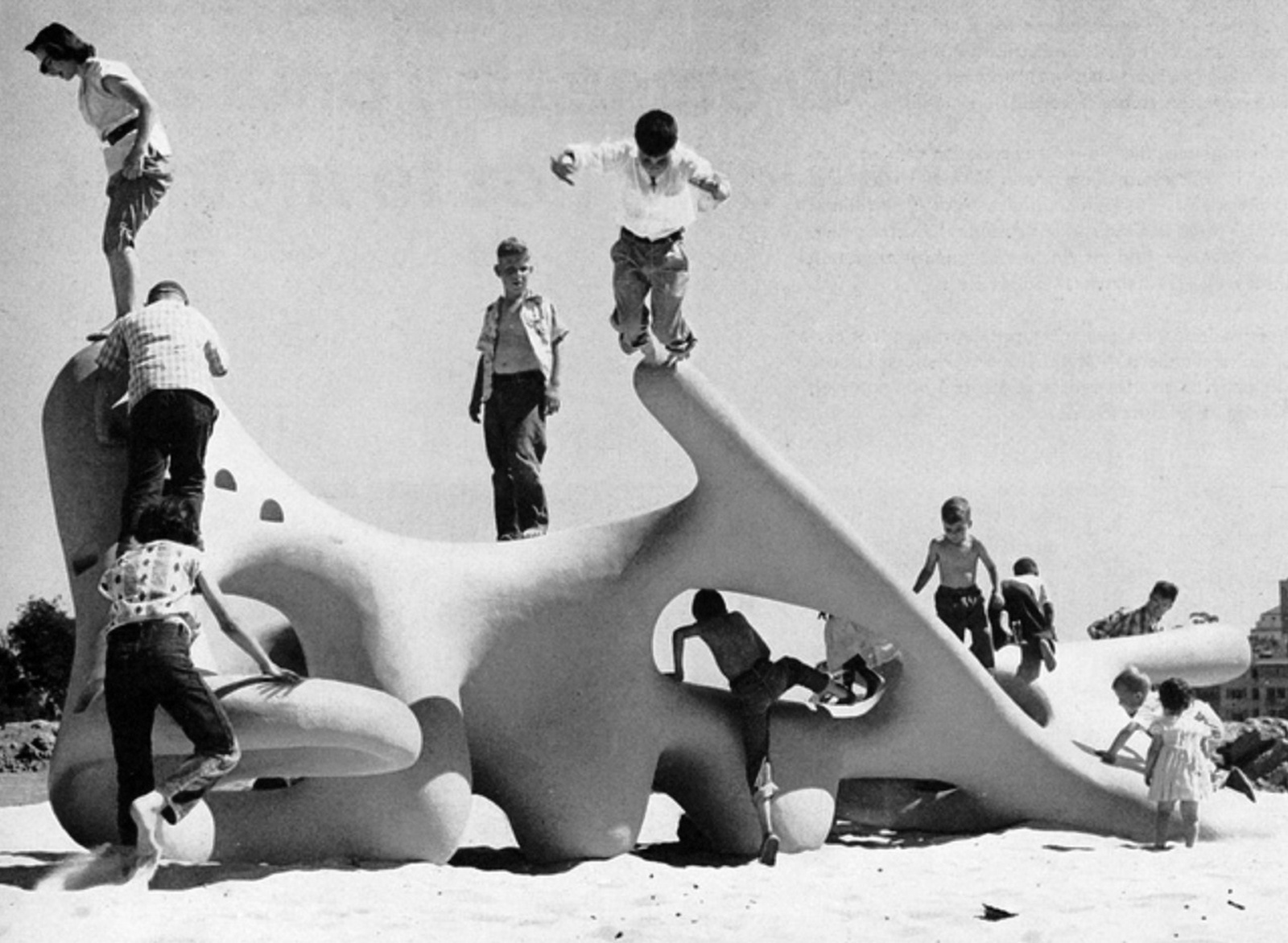
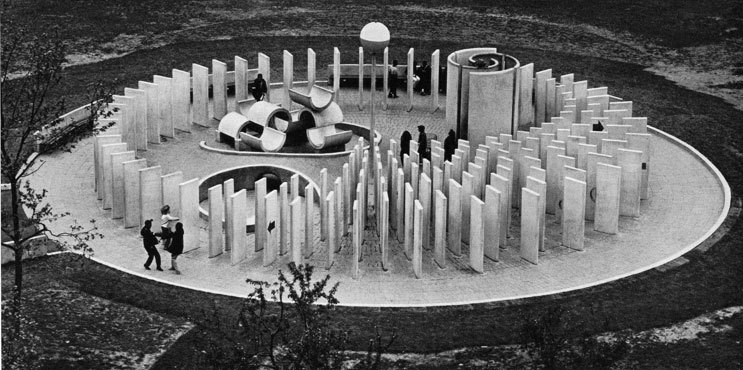
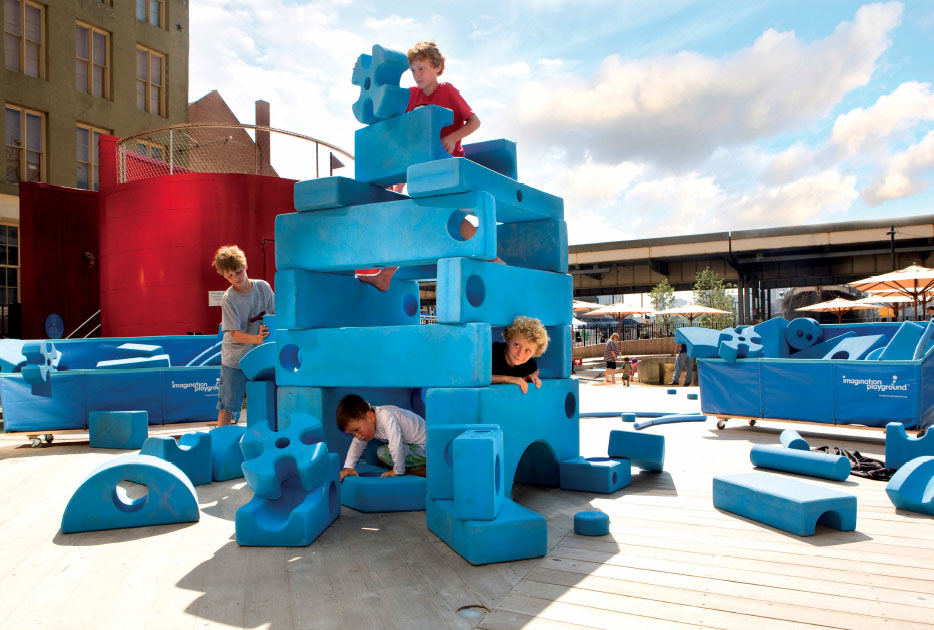
Some contemporary sculptural, experimental playgrounds here
And a dedicated blog
+ Pioneers and visionary playground designers
City as playground
Urban skating
Parcour
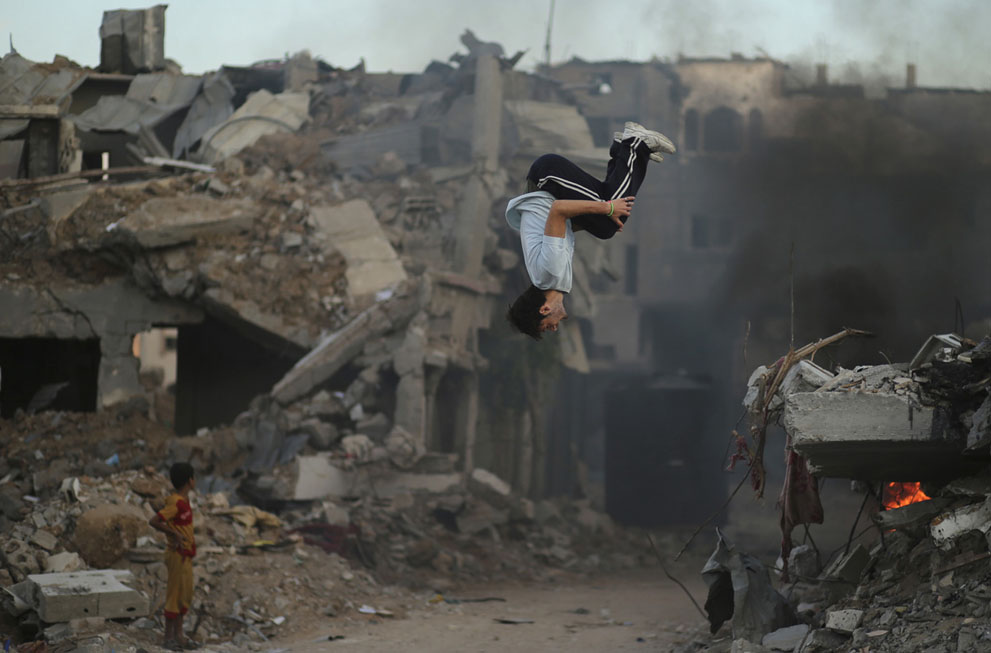
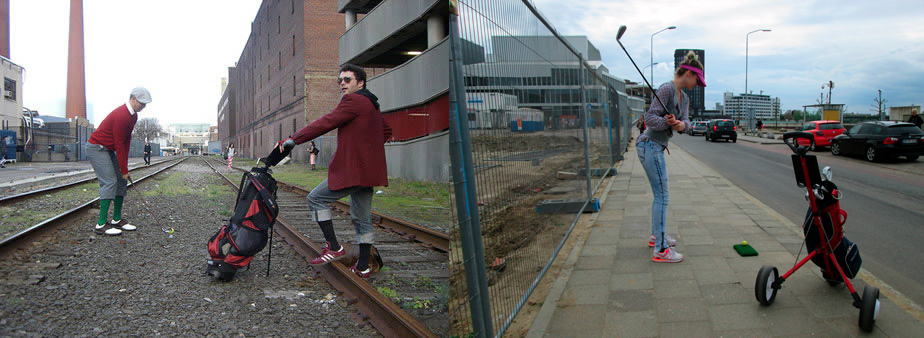
see also Bocce Drift
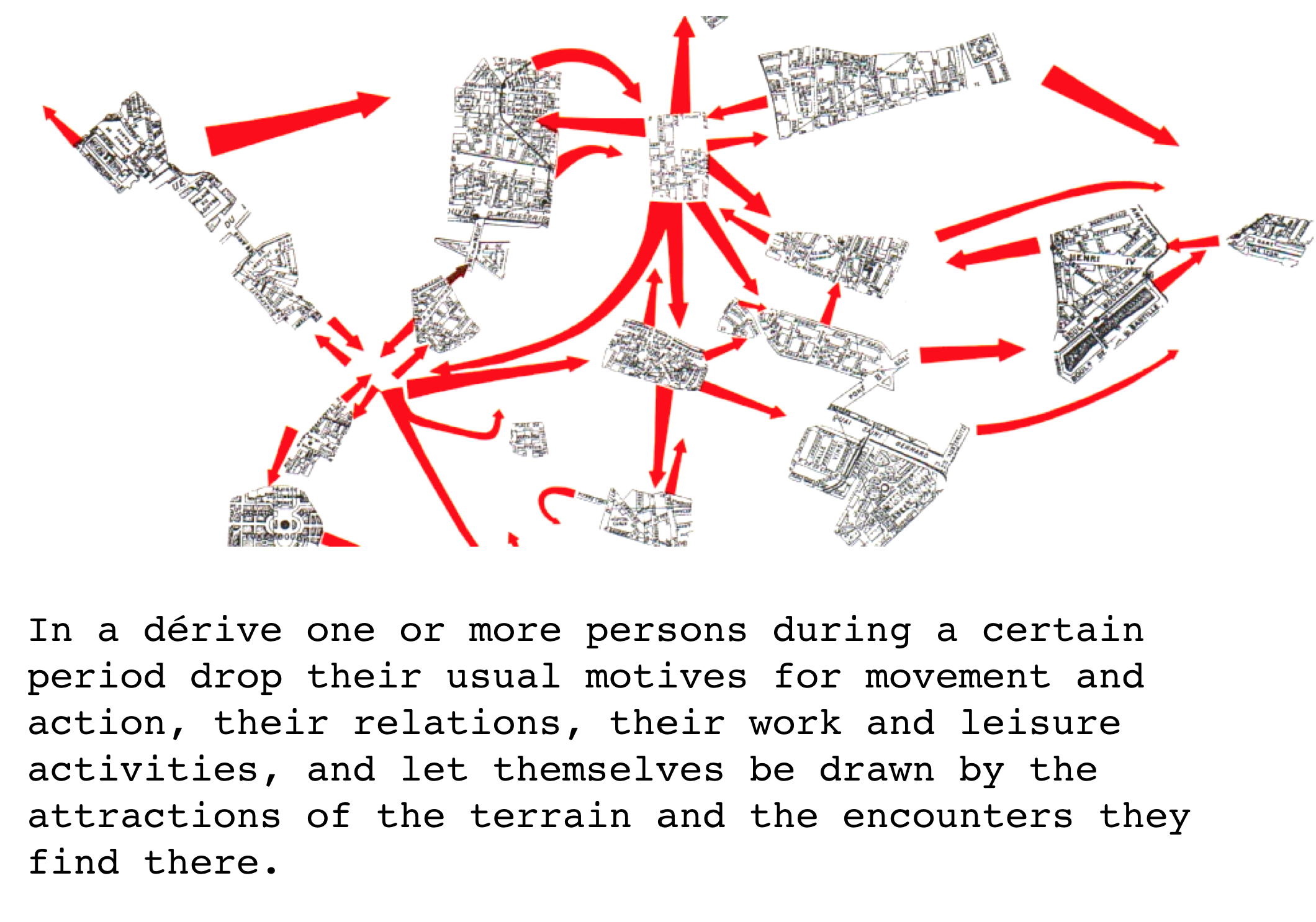
The Situationist practice of psychogeography and drifting, was theorized in ’50s but it has since been developed by artists and game makers into a genre of strategies for exploring cities, taking pedestrians off their predictable paths forcing them into a new awareness of the urban landscape.
The central distinction that must be transcended is that established between play and ordinary life, play kept as an isolated and provisory exception. “Into an imperfect world and into the confusion of life,” writes Johan Huizinga, “it brings a temporary, a limited perfection.” Ordinary life, previously conditioned by the problem of survival, can be dominated rationally — this possibility is at the heart of every conflict of our time — and play, radically broken from a confined ludic time and space, must invade the whole of life.
-Contribution to a Situationist Definition of Play – Guy Debord / Situationist International
Contemporary examples:
Transition Algorithm
by Suyin Looui, 2006
The Rules
1. Visit a neighbourhood in transition.
2. Take a photograph(s). This photograph documents physical changes to the neighbourhood and street life, whether they are juxtapositions, conflicts, changes in language, ideals and politics, interactions between people, old/new, rich/poor …
3. Take home a souvenir. This item cannot be purchased.
What would you take home to remind you of this place?
It should be a souvenir of the place you have visited and that marks the changes taking place in the neighbourhood. The souvenir can also be a memory of an overheard conversation or interaction.
SF Zero
A community-sourced game comprised of micro challenges, usually psychogeographic, performance-arty, urban interventions, or mischievous daring tasks. Players join groups that have specific interests and missions. Examples of tasks:
“Insert information in a place that has an absence of information”
“Create a sculpture by arranging things you find on the street”
“Post a copy of the UN’s Universal Declaration of Human Rights in your workplace lunch room. Document how long it takes for HR (or somebody else) to take it down.”
“Tip, in a non-tipping industry.”
“Create a message here on earth that is visible from space. The message can be text, pictures, or both. It must be large enough to be legible on Google maps or Google earth.”
See also
Invisible Playground – playful urban projects
Come out and Play – new/street game festivals – check the archives
Ludocity — archive of new sports and street games
Flash Mobs
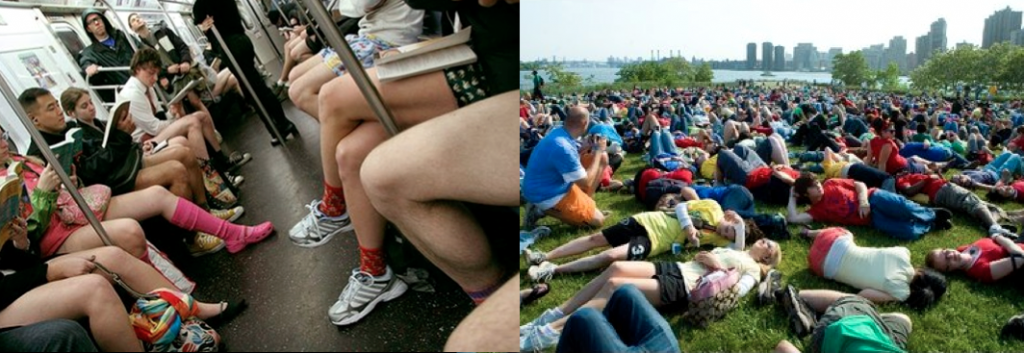
The mp3 experiments sometimes have gamelike elements
Urban Interventions

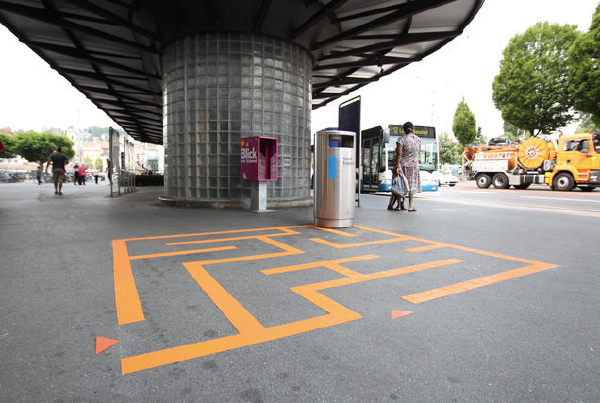
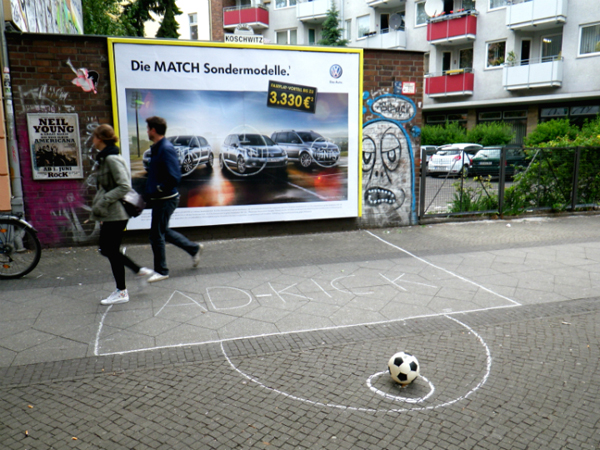
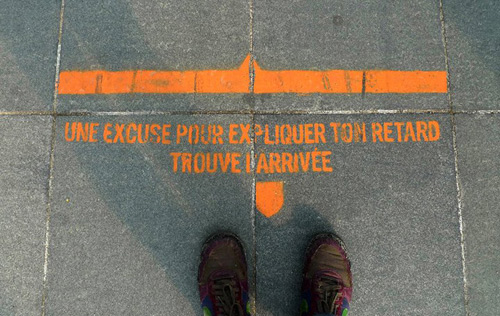
Street art/public space intervention by Democratie Creative et al.
Tiny Games
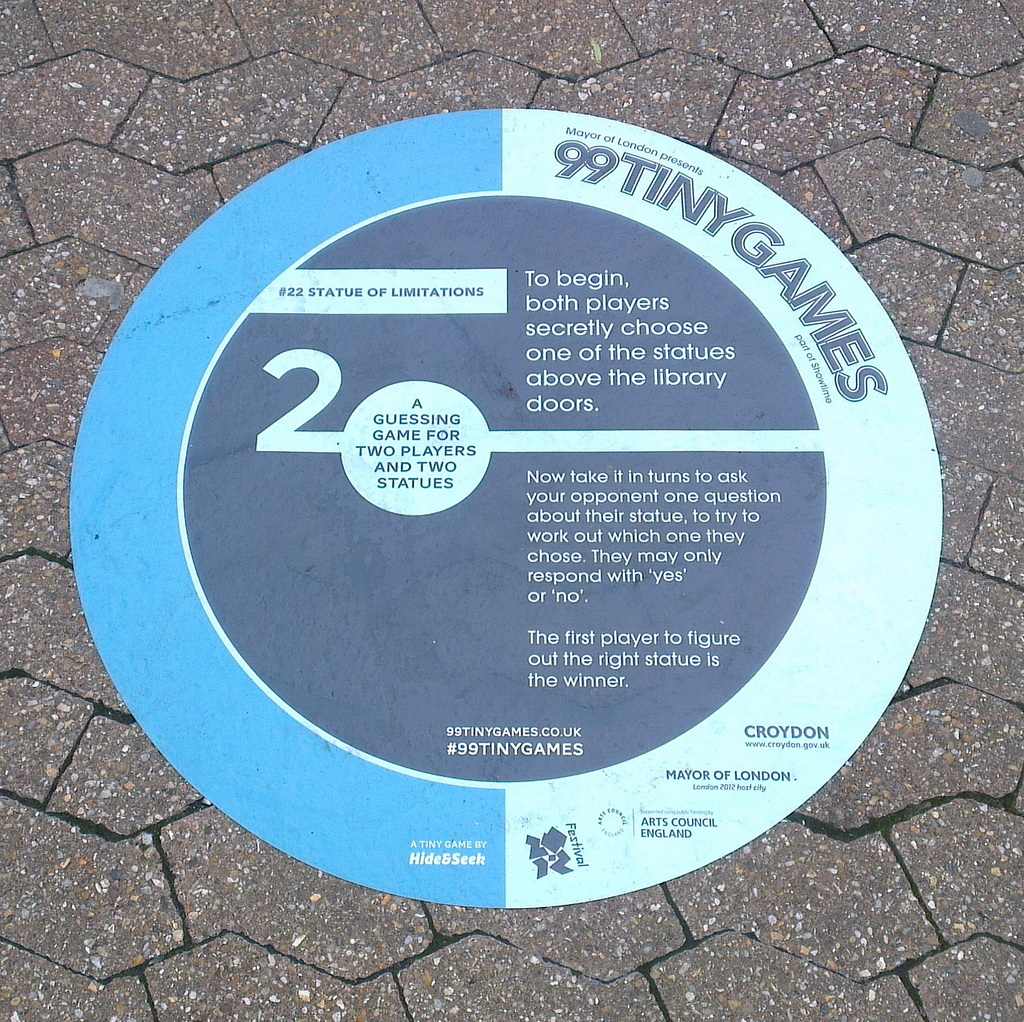
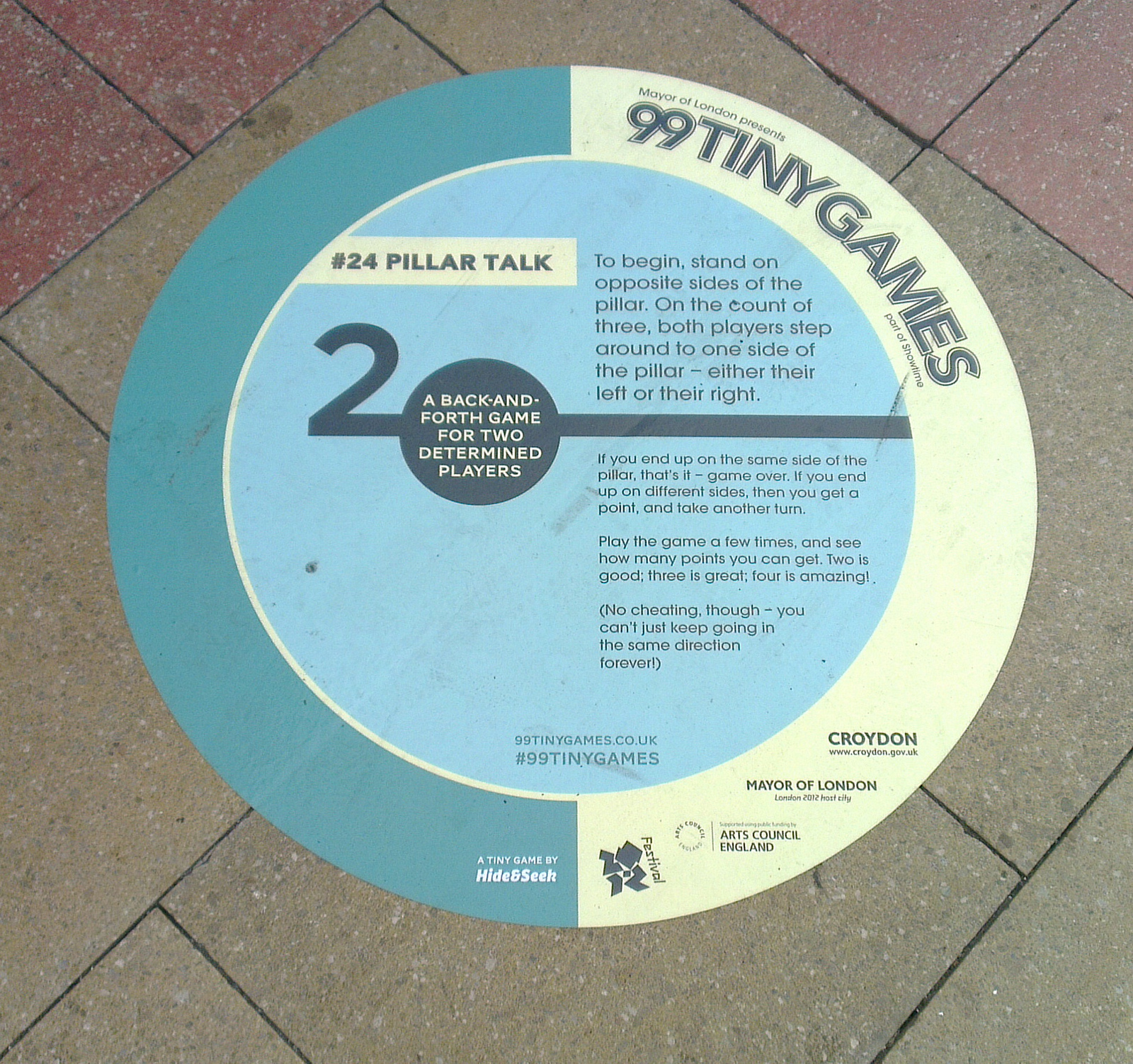
Pervasive games
Expanding the magic circle gamifying (before the gamification fad) urban environments and social interactions.
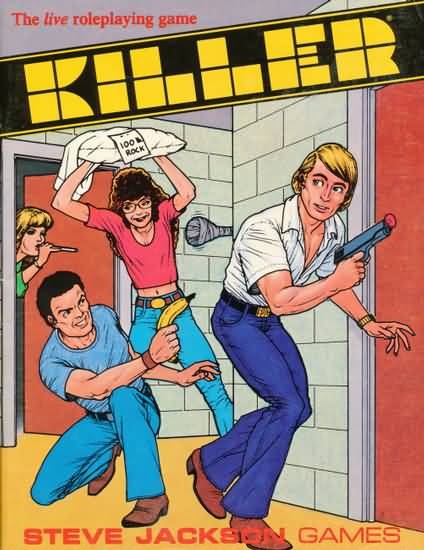
Indirect assassination methods are very creative
Cruel 2 B Kind a game of benevolent assassination
Big Urban Games