
The assignment is to recreate an existing game and then creating a variant of it.
Good news: this how most new games are designed!
These are the games to analyze, recreate and mod. Roughly ordered by complexity:
Pong
Breakout
Snake
Asteroids
Indy 500
Lunar Lander
Robotron: 2084
ET
Frogger
Pacman
Tetris
Super Mario
Let’s look at each them briefly and do a bit of history of video games in the process.
After you’ll get one assigned.
Pre-history
Let’s go back in time.
What’s the first videogame ever?
Right Answer #1
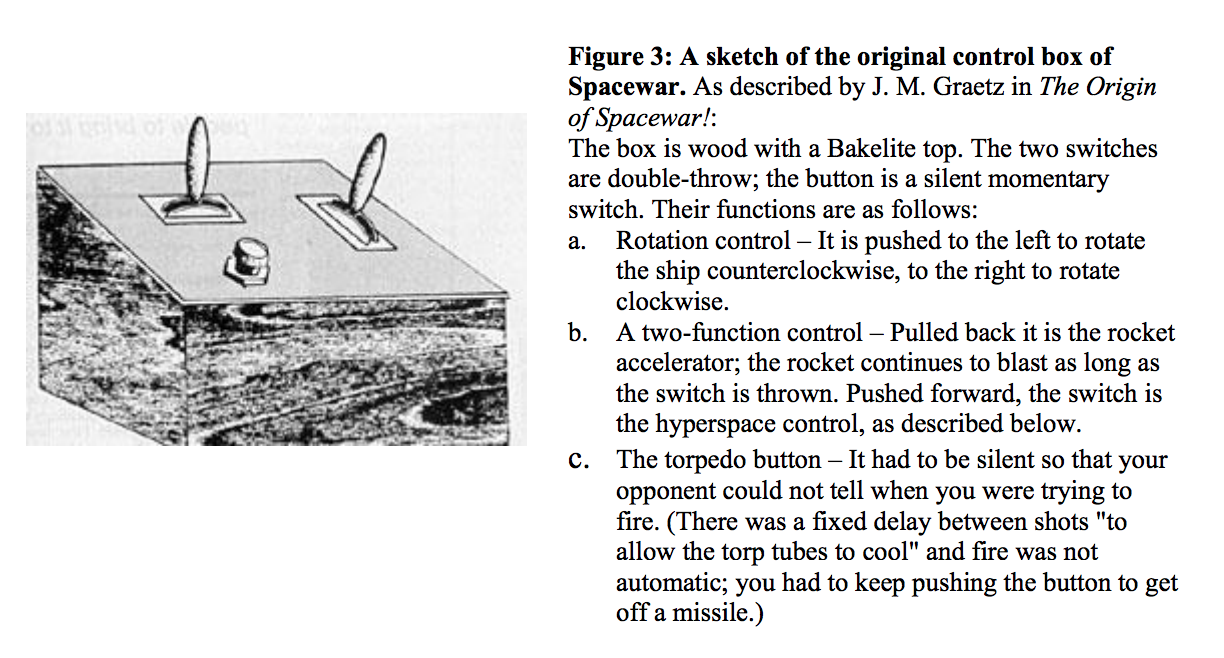
1962 Steve Russell & al. Bastard child of the military industrial complex. Based on a virtual planetarium. Rand on PDP-1 an early digital computer. Open source-ish collaborative creation (modding). Progenitor of Asteroids and all shooters.
Screen was a WWII radar – its roundness possibly affected the design of the game.
Fanatic Life and Symbolic Death Among the Computer Bums by Stewart Brand (Rolling Stone 1972)
The interface was a bunch of awkwardly positioned switches. So they had to invent the joystick. Its mapping still dictates much of the movements in game spaces.
Right Answer #2
1958 William Higinbotham, Robert Dvorak. Analog computer, oscilloscope screen. Pacifist/scientific sibling of Spacewar. Progenitor of pong and all sports games.
Control system based on knobs which spawn a the commercial pong style controllers years later, now out of fashion (but somewhat closer to the analog stick than switches).
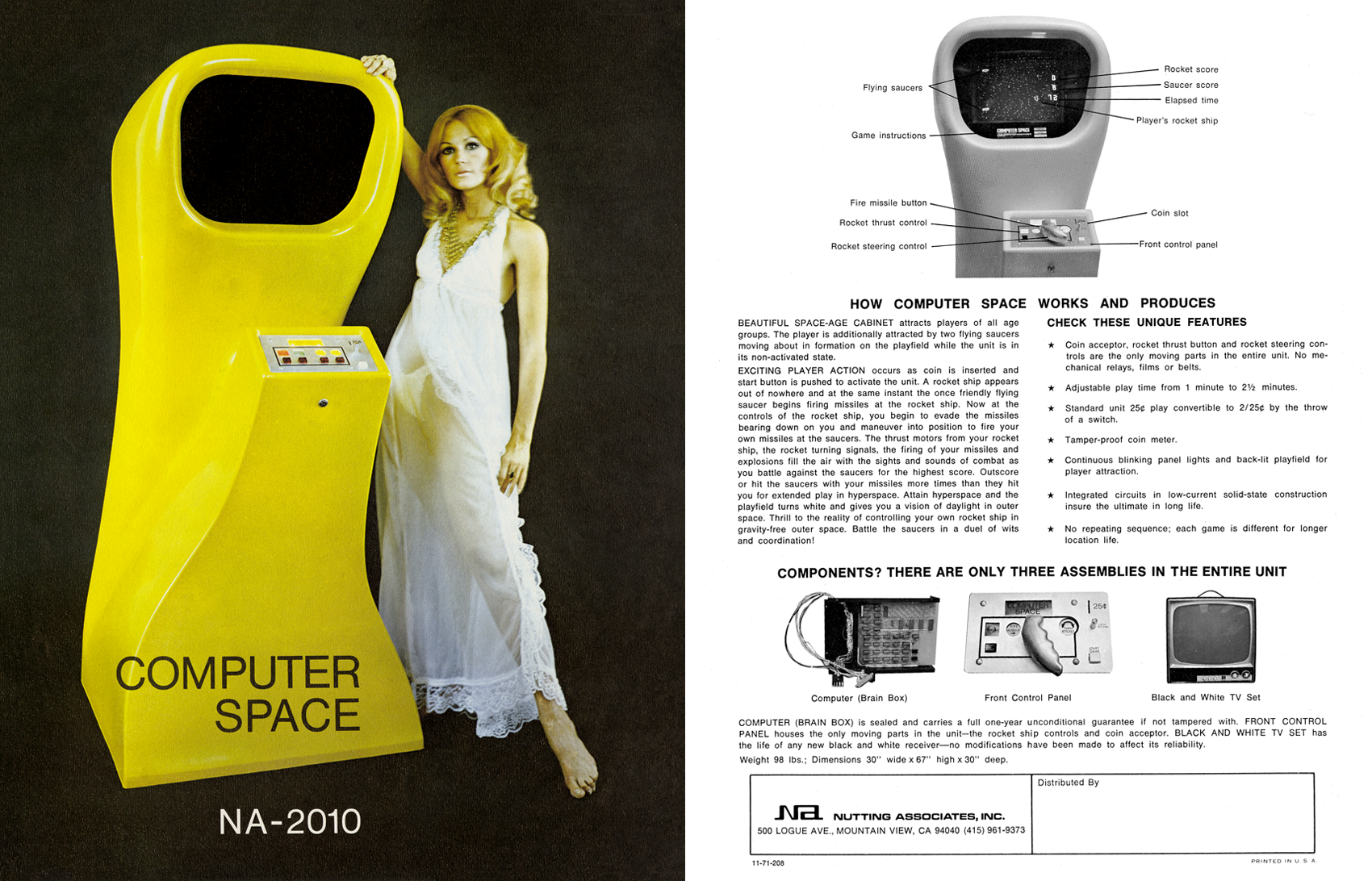
SpaceWar was cloned and turned into a coin operated machine. Not super successful but enough for the creators to launch Atari (which then will publish Asteroids).
 The game ran on a vector system developed for Lunar Lander (1979)
The vector hardware was chosen because the high image quality would permit precise aiming.
Asteroids (1979)
Try an online port here:
https://freeasteroids.org/
Lunar lander (1969-73-79)
Almost educational, sciencey sim.
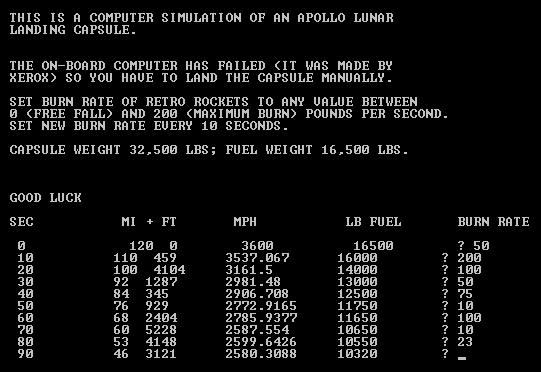
The most famous version was actually a visual iteration of a text simulation.
Pong (Video Olympics for Atari 2600) (1972)
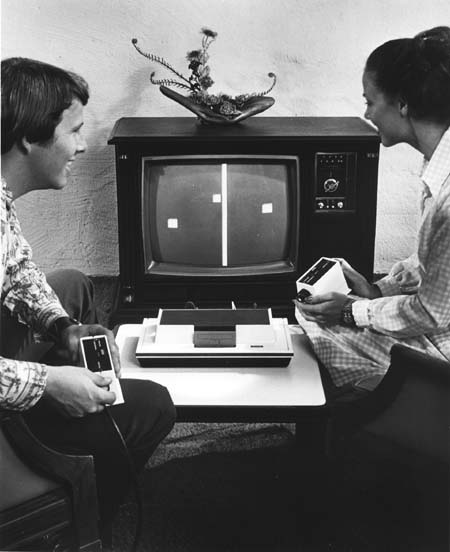
First arcade game by Atari, ripped off from Magnavox, followed a lawsuit.
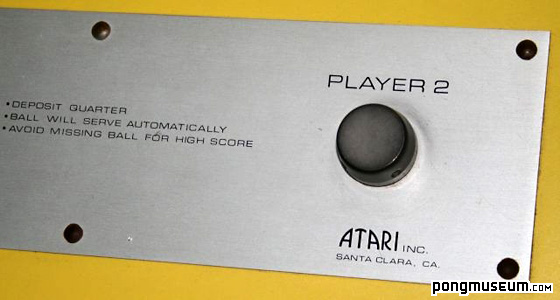
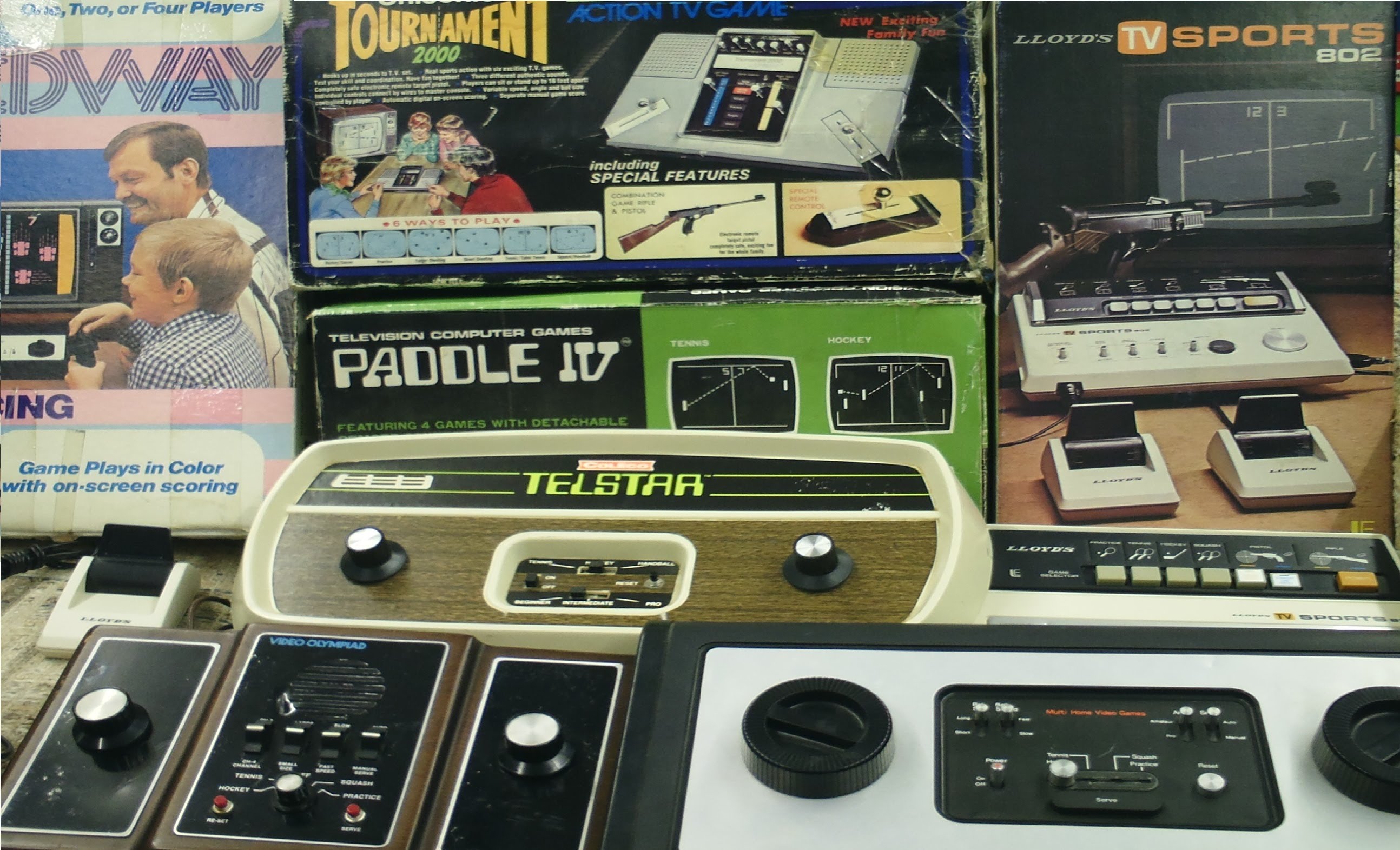
Although Atari and Magnavox were making “official” versions of Pong various clones began to flood the market made by a whole slew of manufacturers. Eventually the demand for the simple paddle game dwindled and companies that had invested large sums of money were seeing a staggering drop in sales as the bubble burst. Some refer to this as the “video game crash of 1977″, a clear foreshadow to the eventual crash of 1983.
Blockade (1976) / Snake (1990)
Gameplay popularized by the movie Tron, resurrected by Nokia as Snake as it came preloaded in all the Nokia phones.
Breakout (1976)
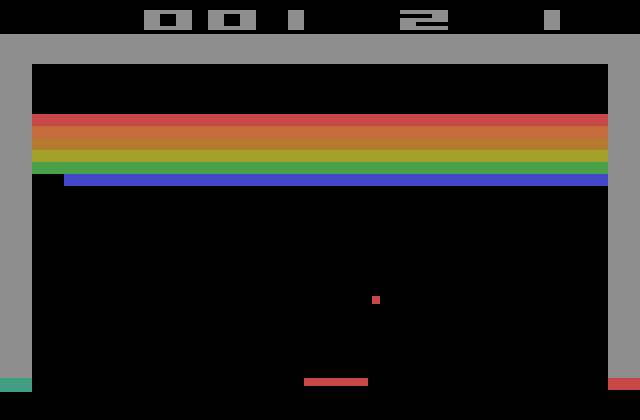
Programmed by Steve Wozniak and Steve Jobs. An attempt to innovate on the pong concept (pong solitaire).
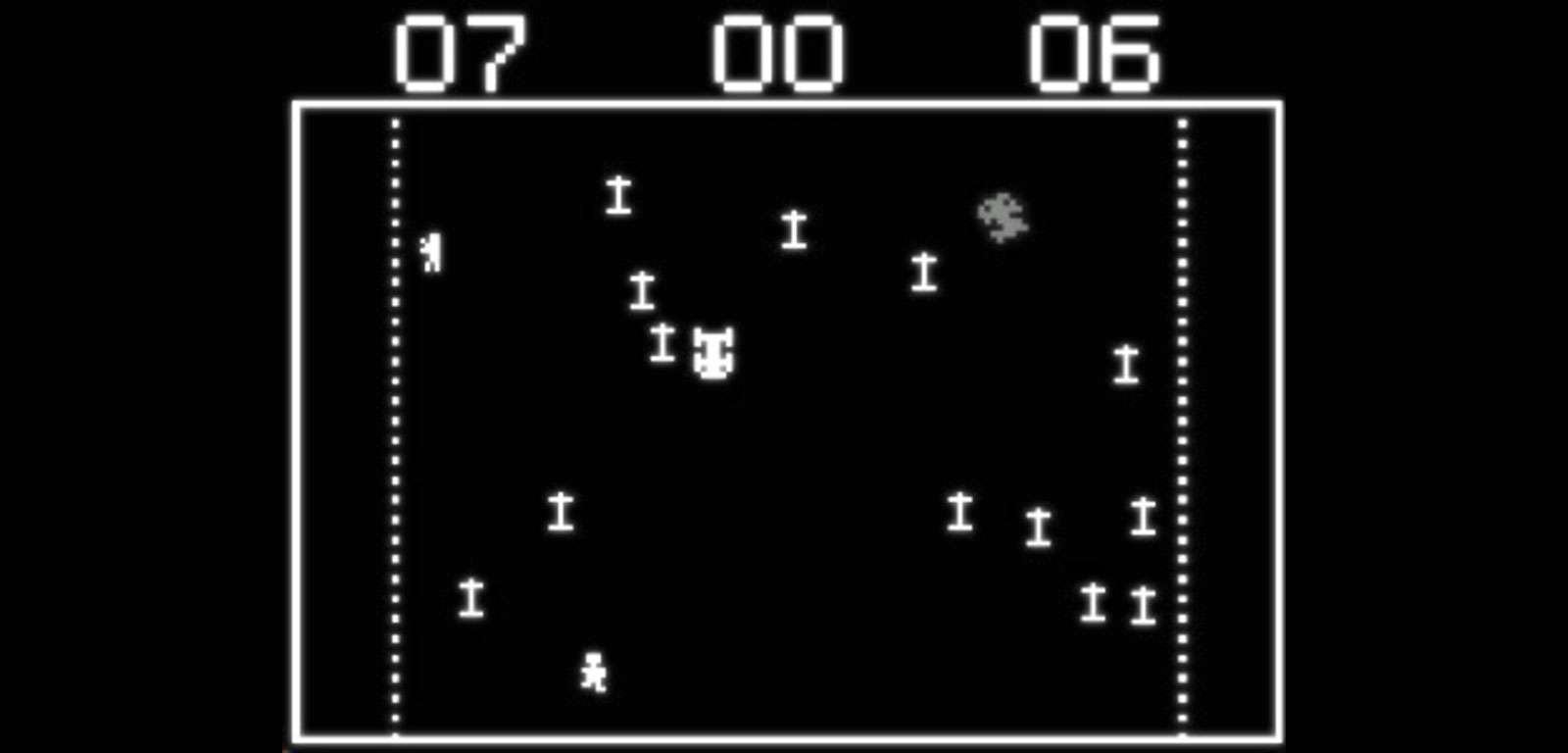
Indy 500 (1977)
Adaptation of Indy 800, obscure 8 player arcade by Atari.
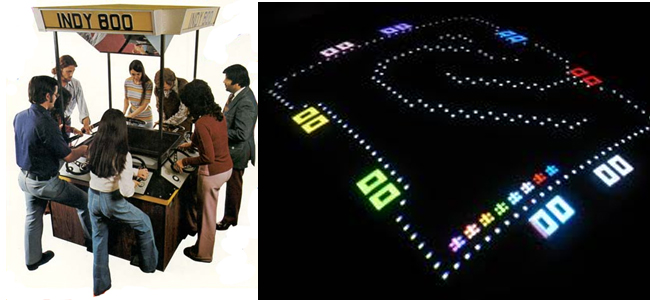
Early top down racing game.
Similar to Deathrace, the first “controversial” game created the year before.
Frogger (1981)
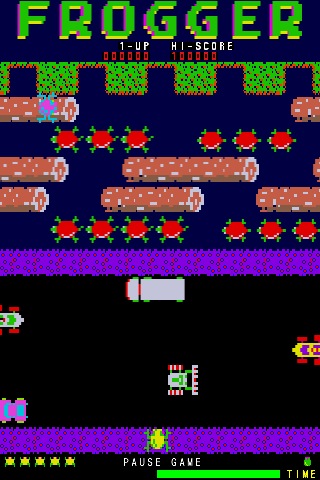
First avoidance/stealth/nonviolent/empathy/environmentalist game?
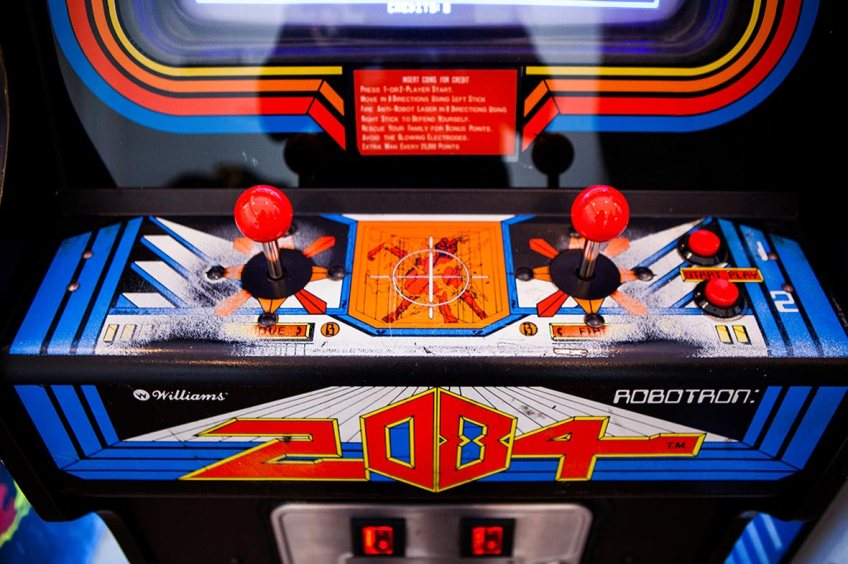
Robotron: 2084 (1982)
Dual controls, still influential (geometry wars, binding of isaac).
Innovations: chain reactions, sound effect blended with music, levels with different feels and strategies, enemies following a complex organic behavior.
Precursor of the standard twin stick controls
Pac-man (1980 Namco)
Iconic design, unique AI behaviors.
Let’s look at the pacman sprite. What makes it so good design-wise?
Compare and contrast with the character design in Ms. Pac-man (originally an unofficial mod):
ET (1982)
“Worst video game EVAR”. It was unjustly blamed for the video game industry crash of 1983, which was generally saturation/overproduction crisis.
Terrible IP tie-in due to unfair deadlines.
Good case study in the difficulty to adapt narrative forms to video game formats.
It marked the loss of control of designers and a growing influence of publishers.
BUT Some interesting features: a disempowered protagonist, the open world-ish gameplay.
Super Mario Bros. (1985)
Let’s look at the first screens as implicit tutorials. What and how do they teach the main mechanics?
(Now these are all familiar tropes and mechanics, but many were popularized by SMB)
For an in-depth analysis read this short essay by Anna Anthropy.
Super Mario Bros was a launch title for the Nintendo NES. It basically saved the industry by marketing video games as toys. That’s why we associate games with kids.
In the West the gender segregation of toy stores (pink aisle) meant games became increasingly perceived as Boy toys.
Tetris
Tetris was created by Soviet software engineer Alexey Pajitnov in 1984, inspired by pentomino puzzles.
The addictive game spread via floppy disks in the USSR before Henk Rogers secured the handheld rights for Nintendo’s Game Boy in 1989, launching Tetris into global superstardom and making it a cultural phenomenon.
Rogers traveled to Moscow to negotiate with Soviet officials (who owned the rights of the game), facing off against American companies like Mirrorsoft and Atari for the computer and console rights. The complicated licensing of Tetris had been a looong epic that I’ll spare you.
There is an interactive documentary: