Let’s talk about the 4 board games you’ll be assigned to modernize, doing a bit of critical history in the process. Each game is paired with a few key concepts in game design.
The Game of Life
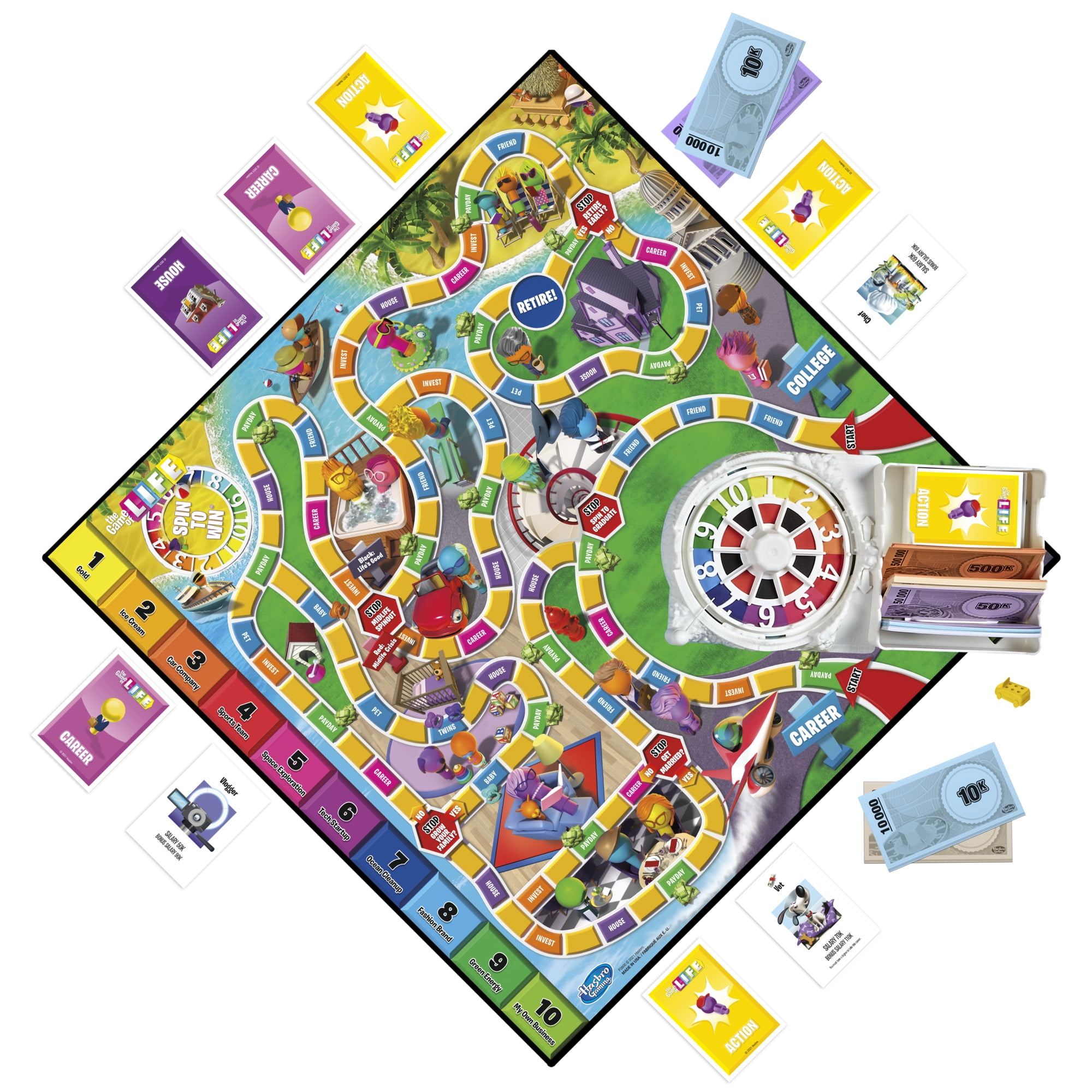
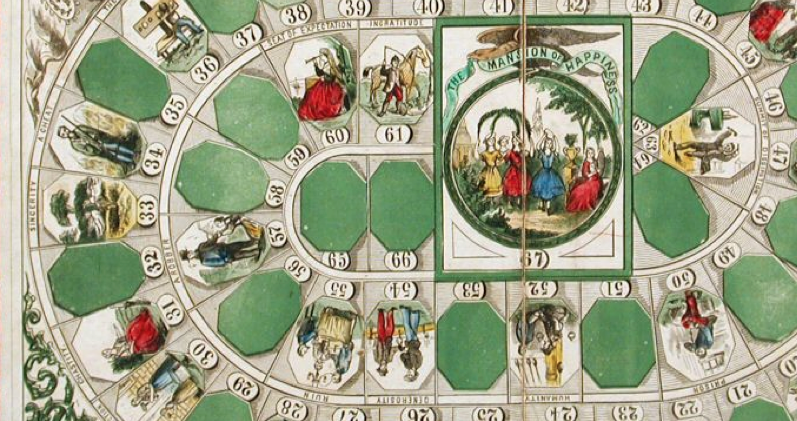
The game of life is a descendent of morality-based games like the Mansion of Happiness (one of the first commercially produced board game) and roll and advance games like the Game of Goose.
More on the history and of early board games in the chapter Board Games from Critical Play by Mary Flanagan
Skill vs chance
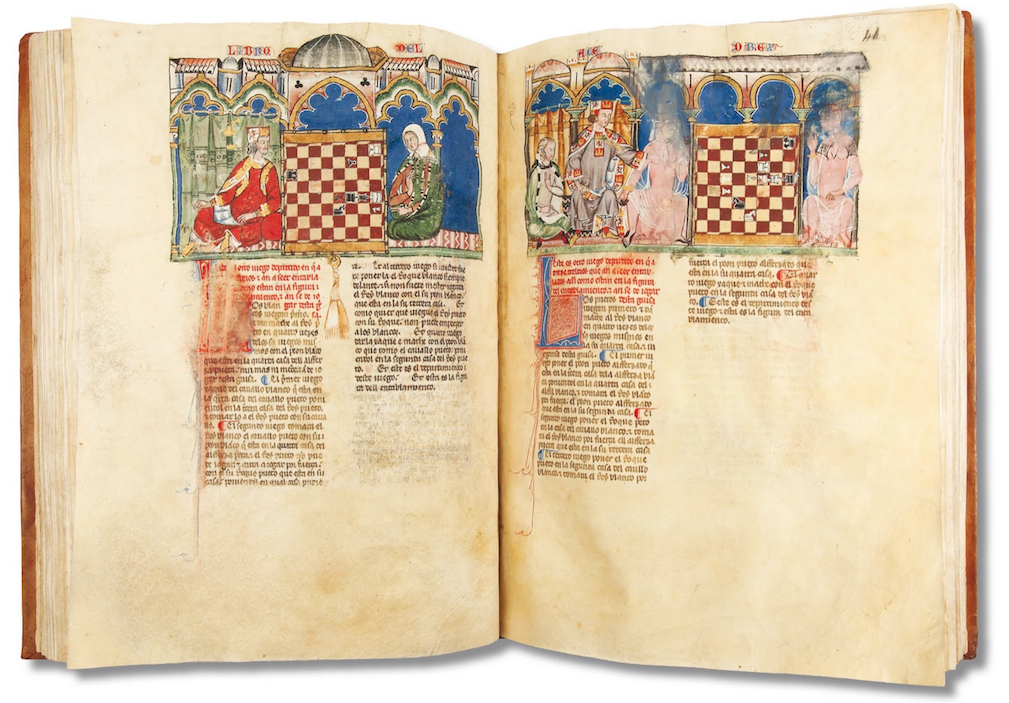
Libro de los juegos
The text is a treatise that addresses the playing of three games: a game of skill, or chess; a game of chance, or dice; and a third game, backgammon, which combines elements of both skill and chance.
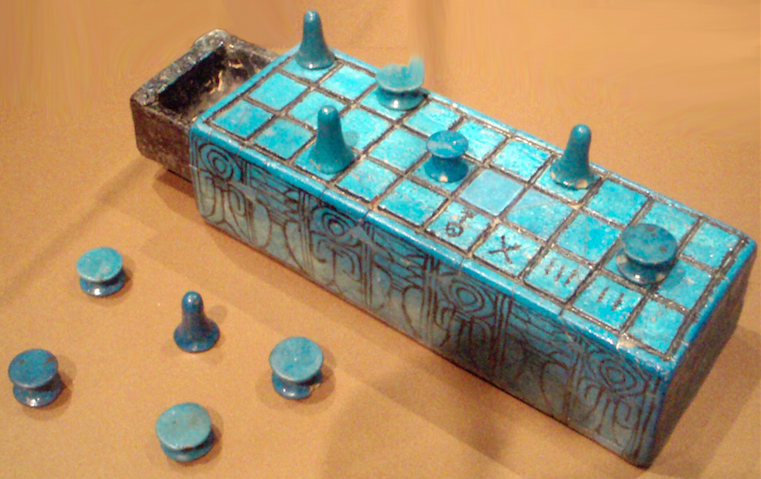
How old are boardgames exactly?

This is when the homo sapiens started to become sedentary and developed agriculture. In these games the tokens are seeds and they are based on sowing and reaping. We can easily infer that they were used to support the conceptual development of the agrarian mentality.
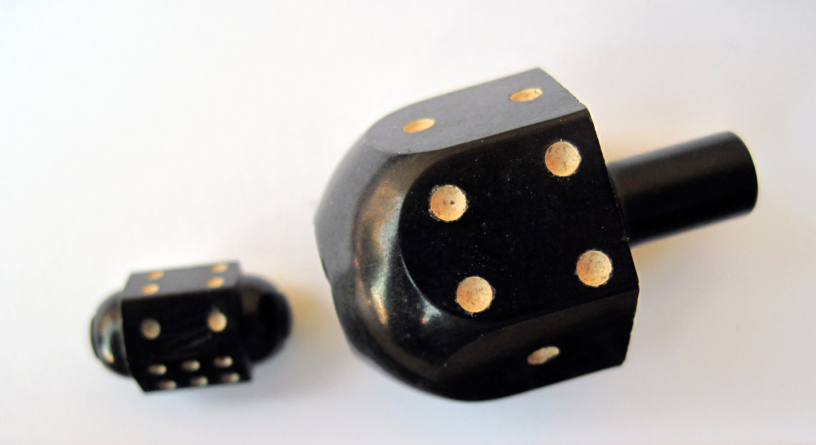
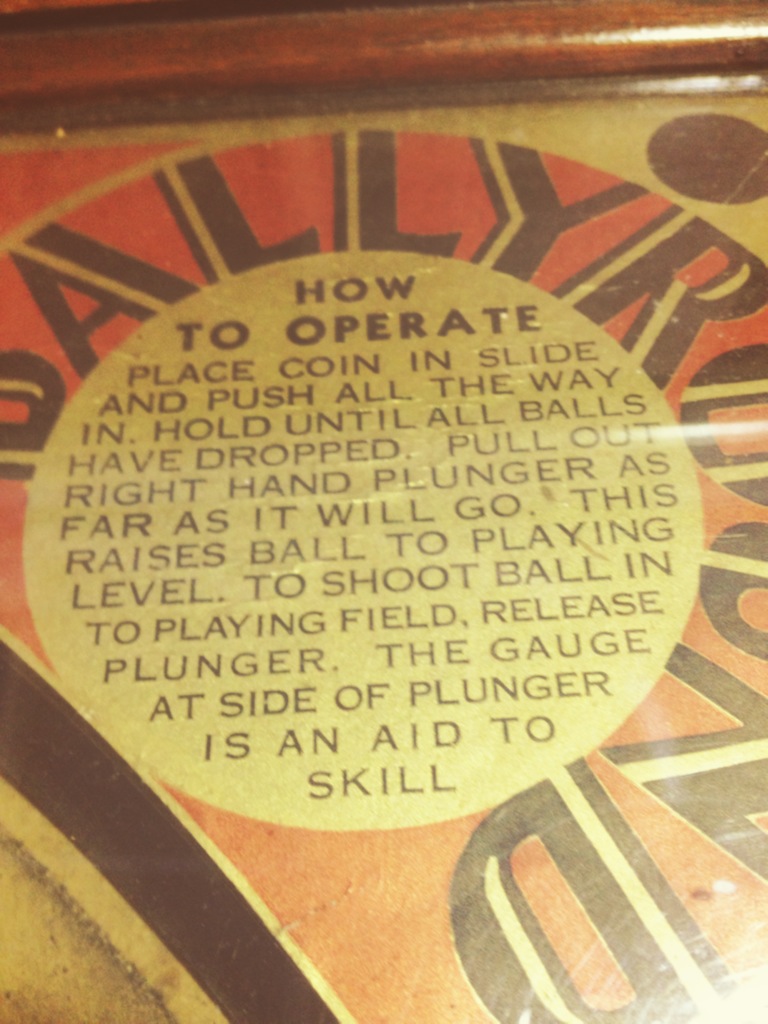
Digital slot machines, traditionally random, are becoming increasingly more sophisticated adapting to the users behavior, giving an illusion of agency, and producing wins that increase the addition cycle.
Gambling machines are becoming more videogame-like to attract millennials, posing dilemmas to gambling regulators.
Meanwhile F2P and social games introduce elements of gambling and designed addiction cycles. They rely on “whales” or few heavy spenders, just like casinos.
Even completely skill games are adding gambling like elements like loot boxes which are attracting the attention of regulators.
Digital games are traditionally more oriented toward skill, the popularity of the roguelike meta-genre (which includes Imbroglio, FTL, Spelunky, or the binding of Isaac) suggest a increasing taste for uncertainty and risk.
Q-UP a 2025 coin flipping game that is all about manipulating a 50/50 chance:
Post decision luck vs pre-decision luck
Pre-decision luck (input/pre-action) involves random events occurring before choices are made, allowing players to adapt, strategize, and feel empowered.
Conversely, post-decision luck (output/post-action) occurs after a choice, often rendering skill irrelevant and causing frustration as random outcomes dictate success or failure.
Modern games, both digital and analog tend to favor the first kind of luck.
The Landlord’s Game
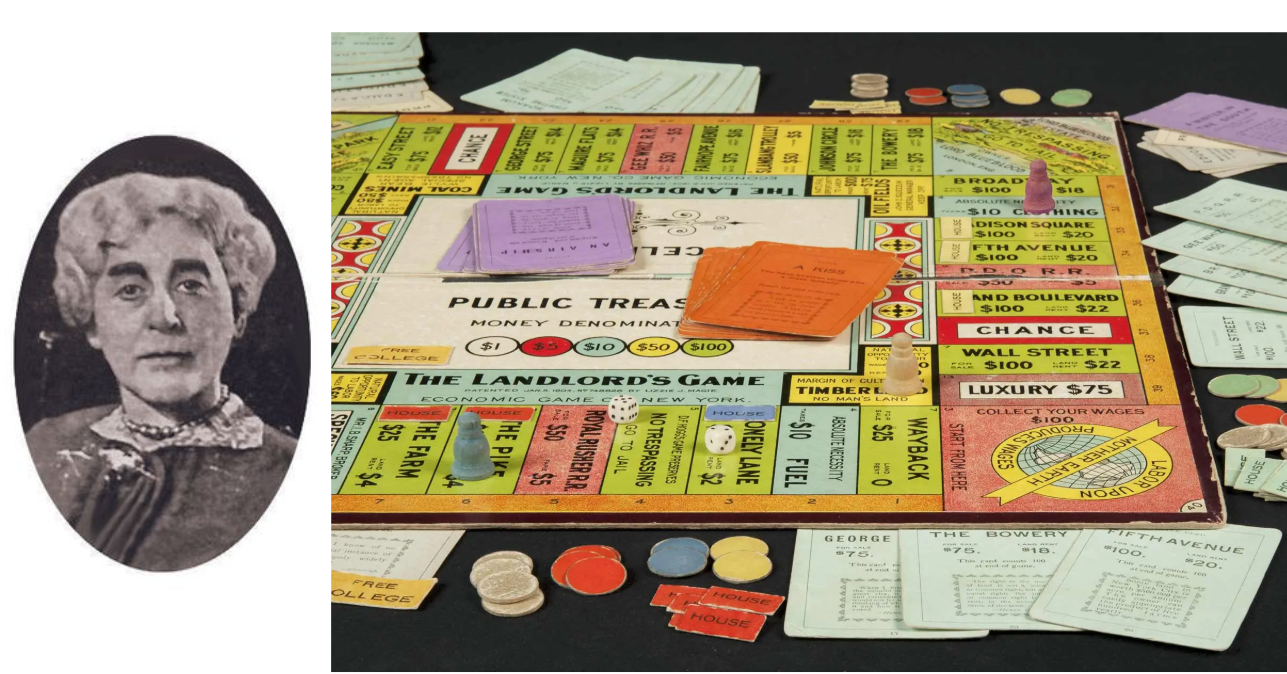
The first activist game was designed more than 100 years ago by a Quaker woman called Lizzie Magie (it was the first game that obtained a US patent).
She believed that the main cause of poverty was land monopoly and the way to solve it was to impose a single uniform tax that would discourage speculation.
So she created a game to represent this conflict.
You could play the game with rules representing the status quo, in which the rich gets richer.
Or with rules envisioning anti-speculation taxes.
Unfortunately the capitalist version was more fun.

Thirty years later a man called Charles Darrow patented a modification of the landlord’s game and turned into a “pro landlord” game. It would later become Monopoly.
Snowballing
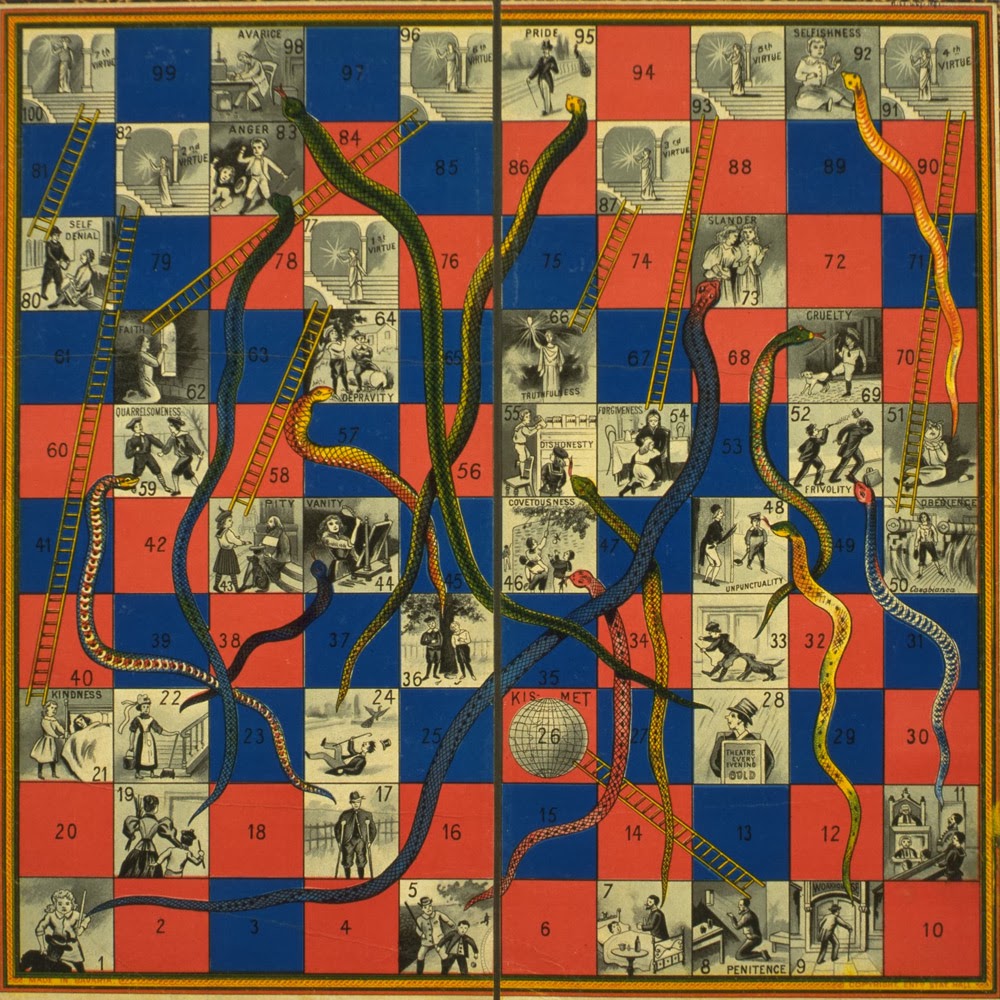
Any game in which your score increases your power is likely to display snowballing aka reinforcing or positive feedback loop. In real world “the rich gets richer” etc.
Examples: monopoly, chess, starcraft.
This may produce an undesirable game arc since in such kind of games players can be “effectively” eliminated early. There are a few ways to address this:
– Separating scoring and resources.
Examples: most sports (can you imagine a snowballing soccer?), most eurostyle boargames (among the ones you played?).
– Introducing catch-up mechanics or negative/balancing loops.
Example: Super Mario Kart or organically emerging “target the leader”. Other examples?
– Chance.
Is the snake in snakes and ladders really a catch-up mechanic? What about Flux?
– Increasing stakes.
Snowballing is balanced by attributing more points toward the end thus increasing the possibility of a comeback.
Example: Modern Art.
– Multiple paths to victory
There are different ways to score points so a dominance in one aspect doesn’t determine dominance in another.
Example: Carcassonne.
Depth
How much room there is for the player to get better at the game.
-Clint Hocking
How much is there to explore before you exhaust what the game has to offer.
-Jason Rohrer
How wide is the gap between competent play and expert play (Chess, Guitar Hero, Counter Strike, Tetris, SpyParty).
How big is the possibility space (Chess, Minecraft)
Depth vs Breadth
Games like GTA often forsake the polish on a few individual systems that would give them depth, but instead create room for the player to get better by forging massive networks of highly interconnected systems. Here, the player’s urge to explore and find the boundaries of the simulation pressures him to improve.
Dominant Strategy
A dominant strategy in game design is a tactic, action, or build that yields the highest payoff or best result for a player, regardless of what opponents do. It often leads to predictable, optimal, and sometimes “broken” gameplay, as it removes the need for adaptation. The extreme example of dominant strategy can be found in solved game.
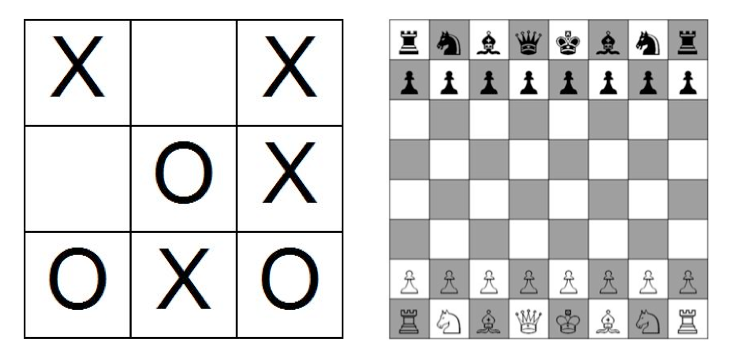
Tic Tac Toe is a solved game meaning its outcome can be correctly predicted from any position, assuming that both players play perfectly (did you know connect 4 is a solved game?).
Exercise: let’s mod tic tac toe to increase its depth.
Candy Land
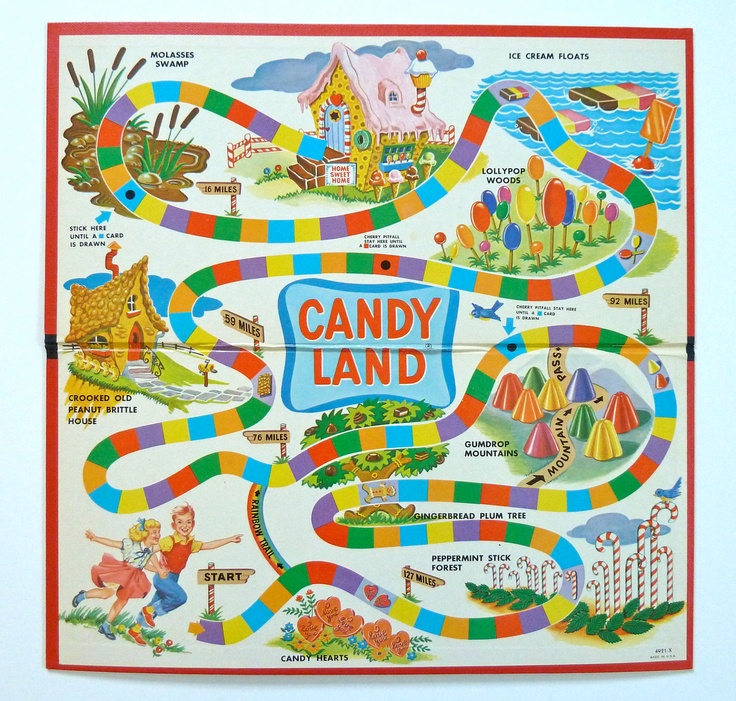 Is it worst game ever? What’s the point of Candyland?
Candyland was invented by Eleanor Abbott, a teacher recovering from polio in a 1940s hospital, to entertain sick children. The original board even featured a boy in a leg brace, making it a symbol of resilience and imagination born from hardship during the polio epidemic.
“The outbreak had forced children into extremely restrictive environments. Patients were confined by equipment, and parents kept healthy children inside for fear they might catch the disease. Candy Land offered the kids in Abbott’s ward a welcome distraction—but it also gave immobilized patients a liberating fantasy of movement. That aspect of the game still resonates with children today.” – The Atlantic
Meaningful play / meaningful choices
In Rules of Play, Katie Salen and Eric Zimmerman provide two definitions of meaningful play (the goal of game design):
Meaningful play in a game emerges from the relationship between player action and system outcome; it is the process by which a player takes action within the designed system of a game and the system responds to the action. The meaning of an action in a game resides in the relationship between action and outcome
Meaningful play is what occurs when the relationships between actions and outcomes in a game are both discernible and integrated into the larger context of the game
Candyland, battleship, bingo lack actual choices.
Tic-tac-toe stops being meaningful to an “expert” player.
When choices are not discernible and integrated, the game may break or stop making sense to the player.
Did my choice had an effect?
Was that event random or was it my fault?
Any video game examples of lack of meaningful choices?

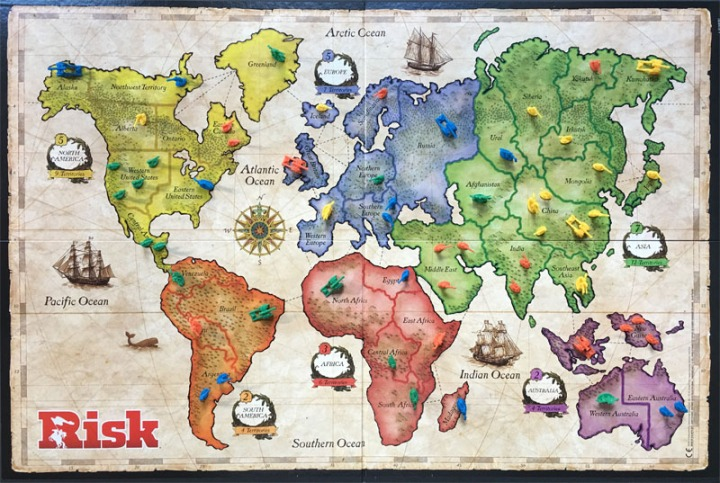
Risk
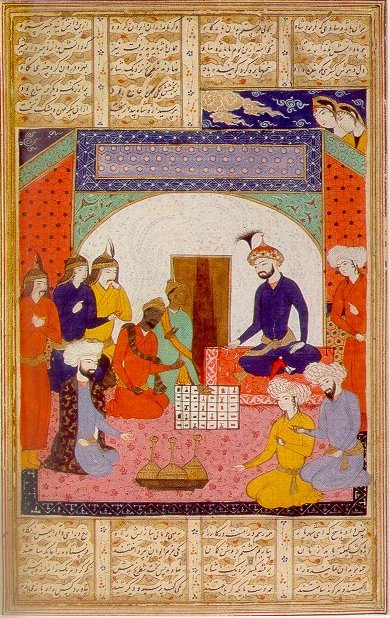
Games and war have been evolving together for a long time. Chess originates in India, spreads to the Arab world and to Europe via Spain due to the Arab conquests (7th–9th c.). Ironically or appropriately via conquest.
Chess has been used to teach the ruling class about strategy in abstract but it’s only in the 19th century that you start to see training/educational games that attempt to simulate battles.
Kriegspiel – the first “educational” war game, and the grandfather of wargaming.
Developed by the Prussian army in the 19 century for training.
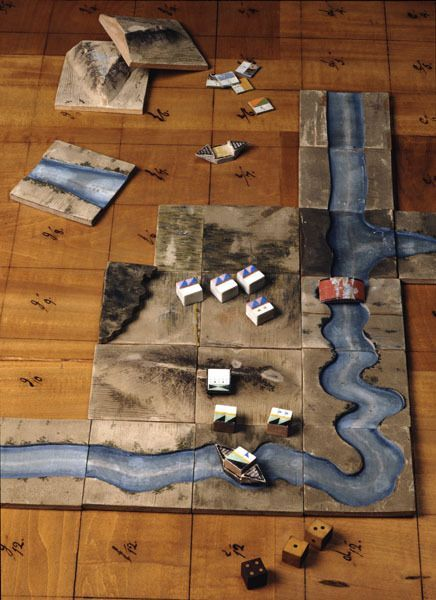
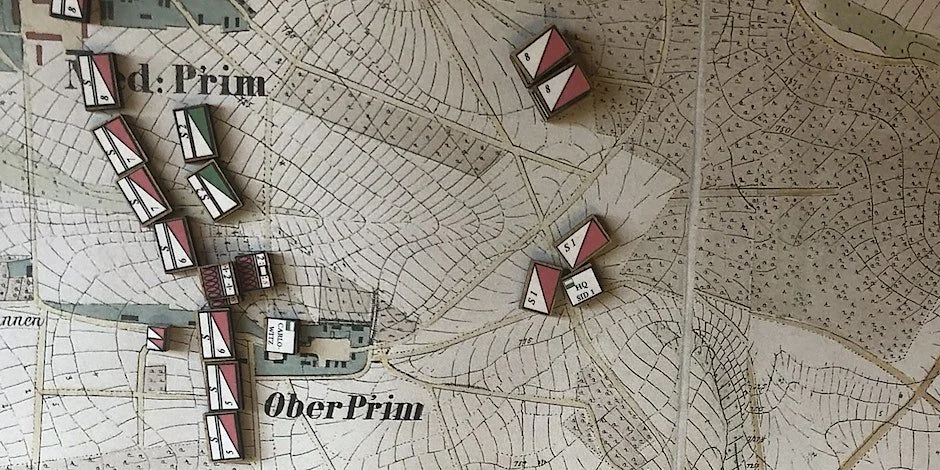
It was cumbersome.
 So they made more portable versions.
 Which evolved into more and more accessible entertainment games like Risk!
But training war games are still used today.
Perfect information / imperfect information
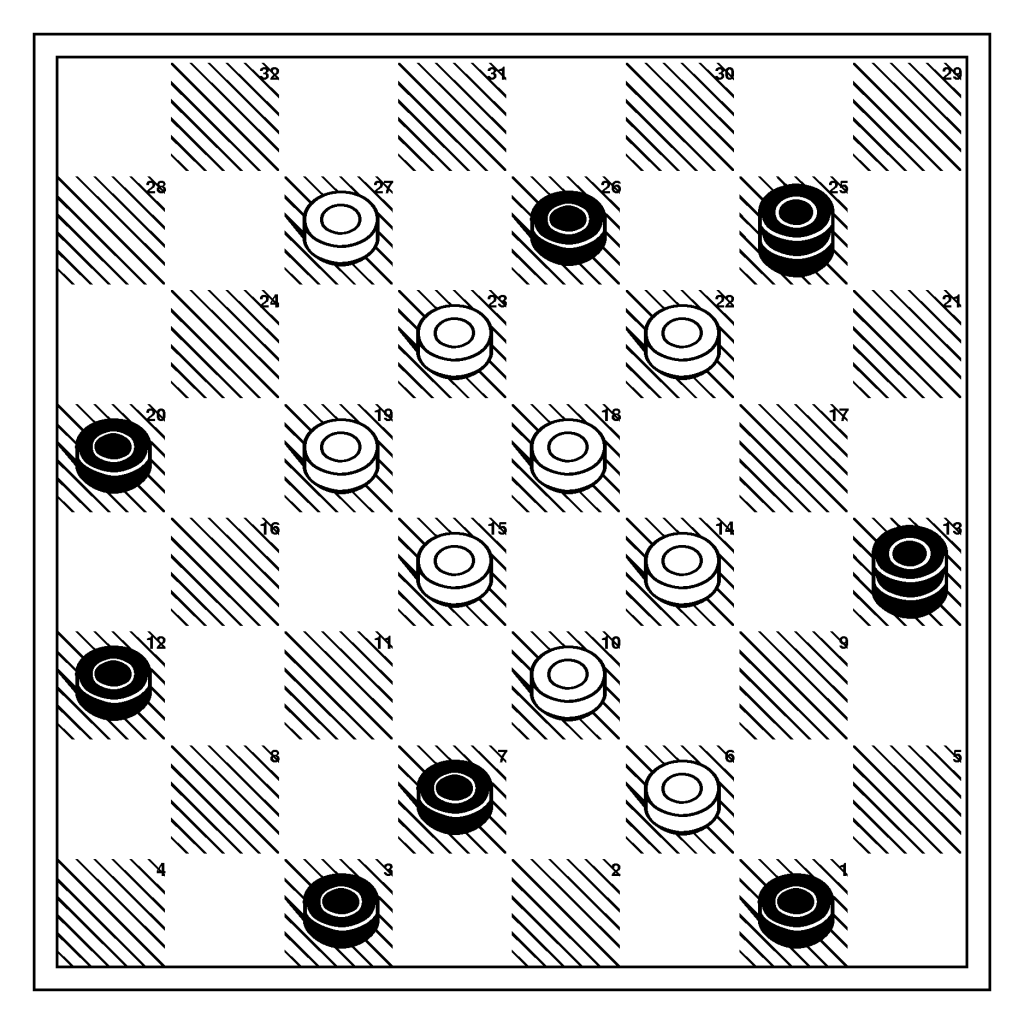
A game possesses perfect information if each player, when making any decision, is perfectly informed of all the events that have previously occurred.
Imperfect information introduces uncertainty but it’s not the same as chance. Some games can have randomness with perfect information and others can have imperfect information without chance. Can you make some examples? From the boardgames we played?
Private/hidden information can become public and vice-versa. Can the rules of a game be information as well?
What about videogames?
Targeted interaction
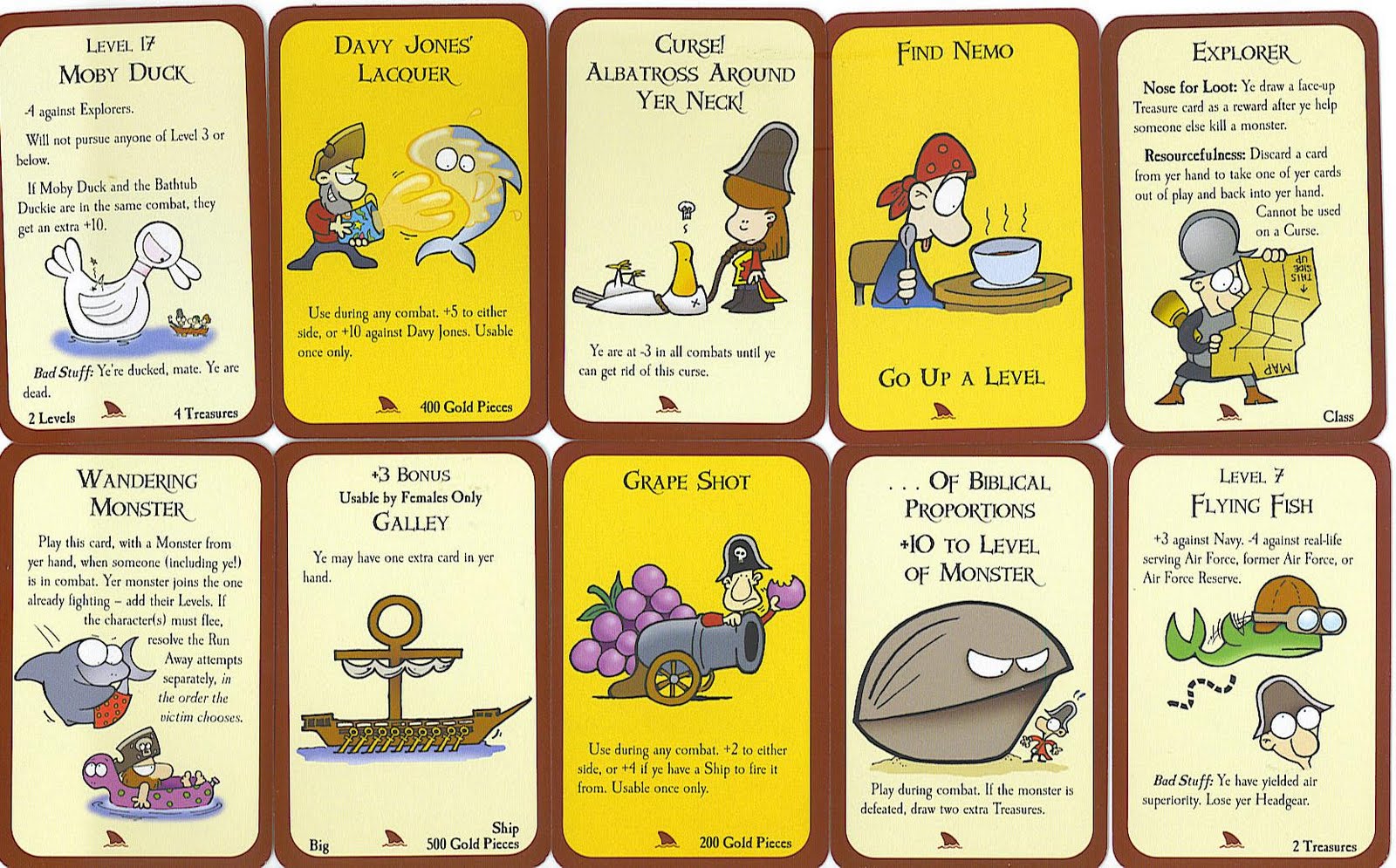
5 fingers – Eric Zimmerman (Chip-taking game)
Rule 1: Get a group of three or more people.
Rule 2: Put up five fingers.
Rule 3: Take turns eliminating each others’ fingers.
Rule 4: Last person with fingers wins.
What are the dynamics and the winning strategies?
Politics/metagaming, “electing” a winner, kingmaking (3rd player problem A & B are contending and C has no chance).
Issues with player elimination or effective elimination (player knows has no chance but has to keep playing), griefing. What are some of the solutions to address problematic interaction in games like Carcassonne, Zooloretto, Guts of glory, Pandemic or others?
Competition/Cooperation
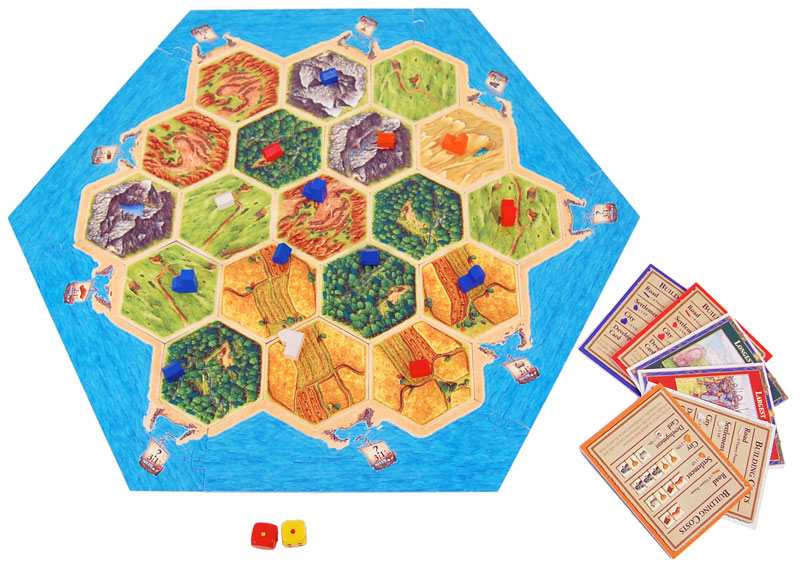
Avoiding direct targeting = family friendliness – trade mechanics veering toward cooperation
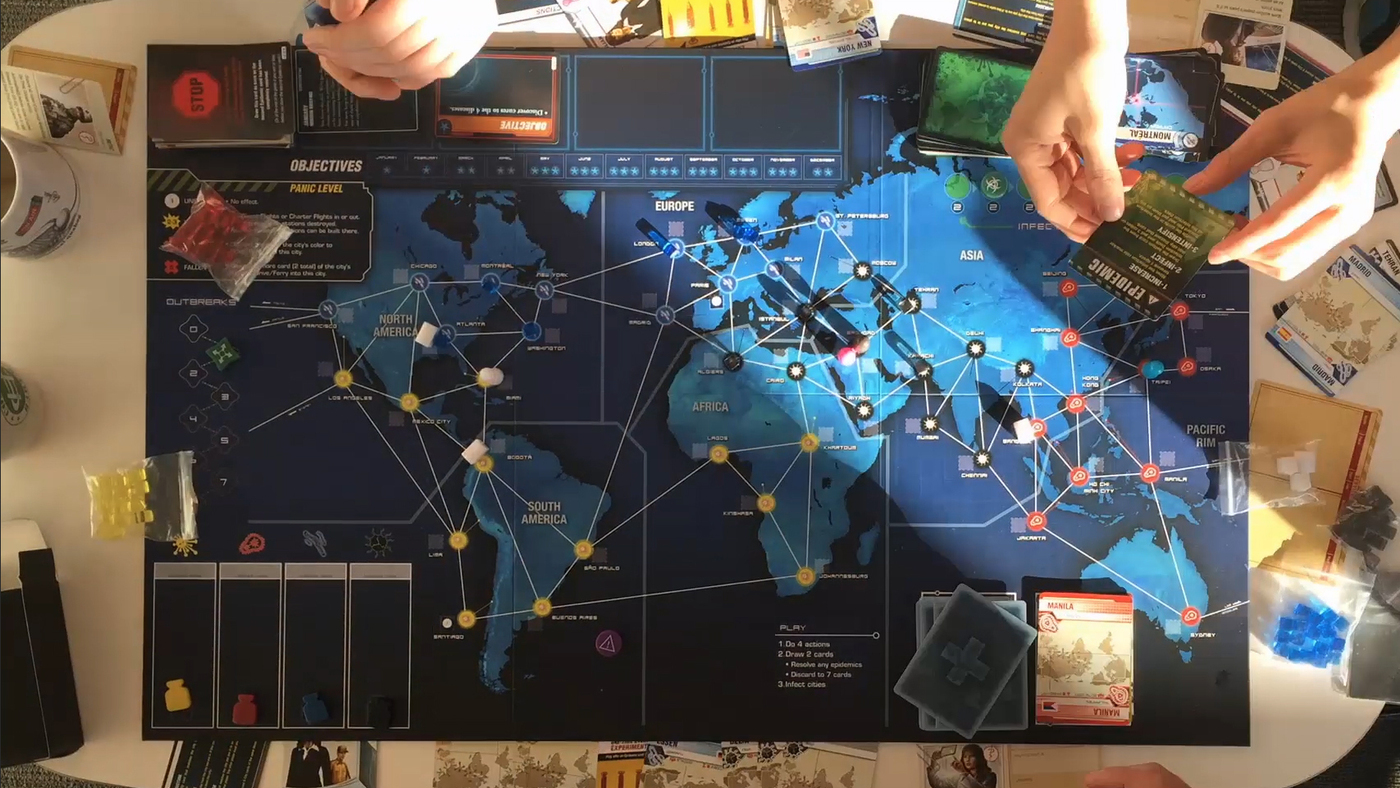
Issues with Pandemic or other co-op games: solitaire played together, expert players monopolizing the game.
The multiplayer solitaire problem and possible solutions: time constraint, roles, sheer complexity…